
Last updated November 15, 2026
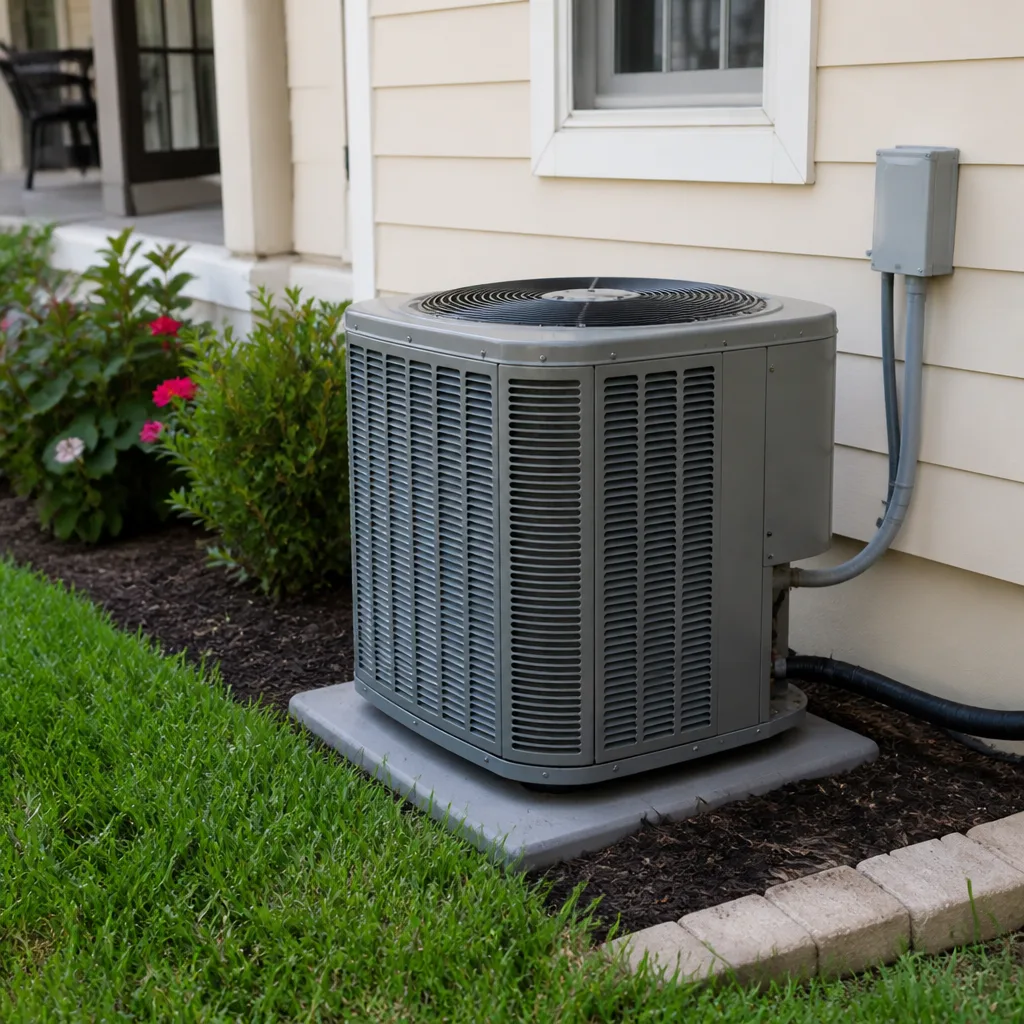 AC repair
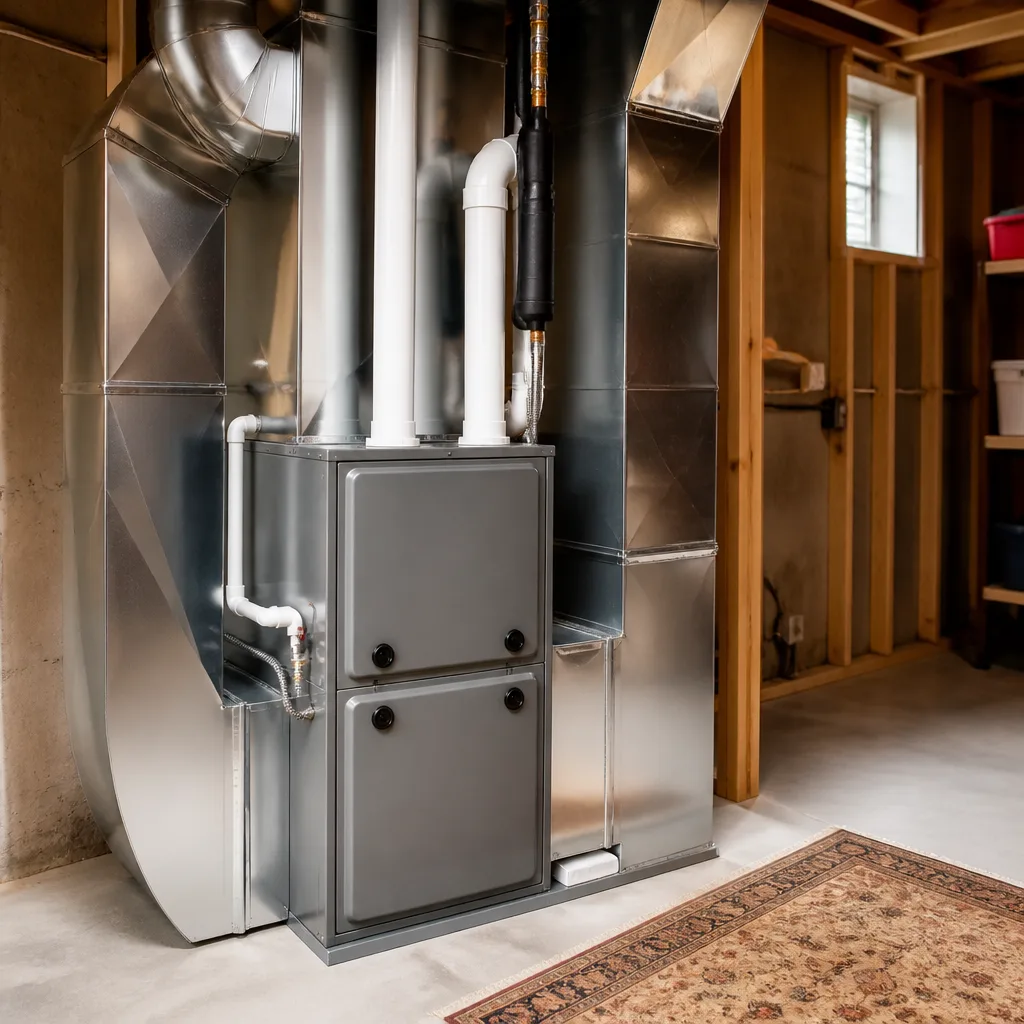 Furnace & heating
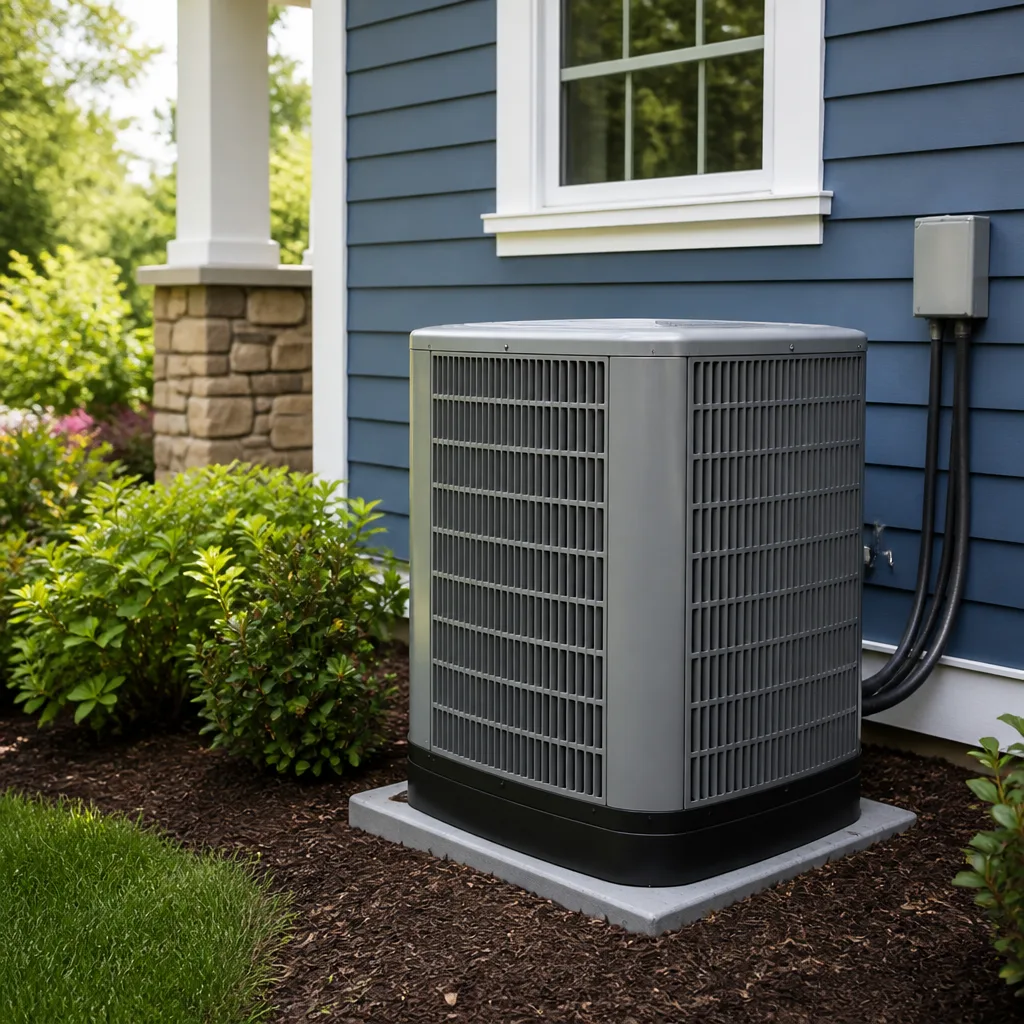 Heat pumps
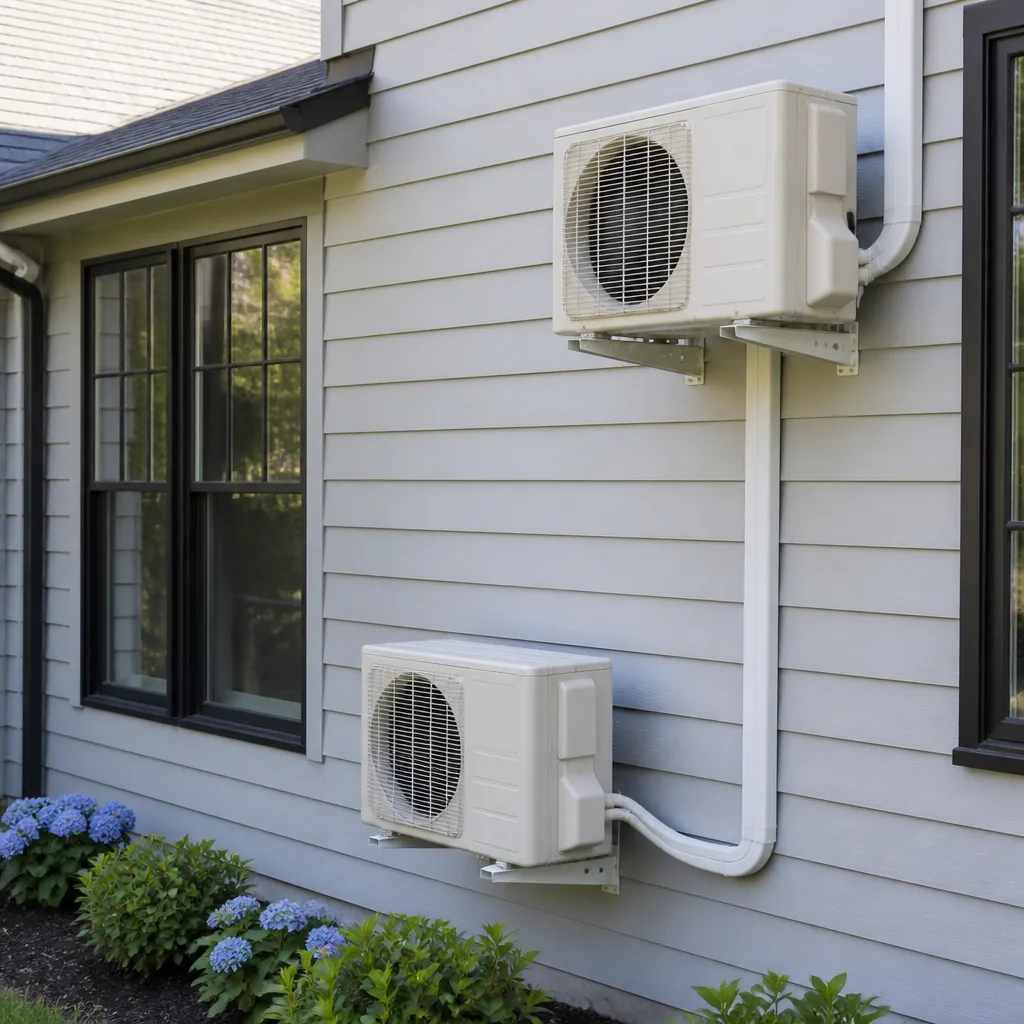 Ductless mini splits
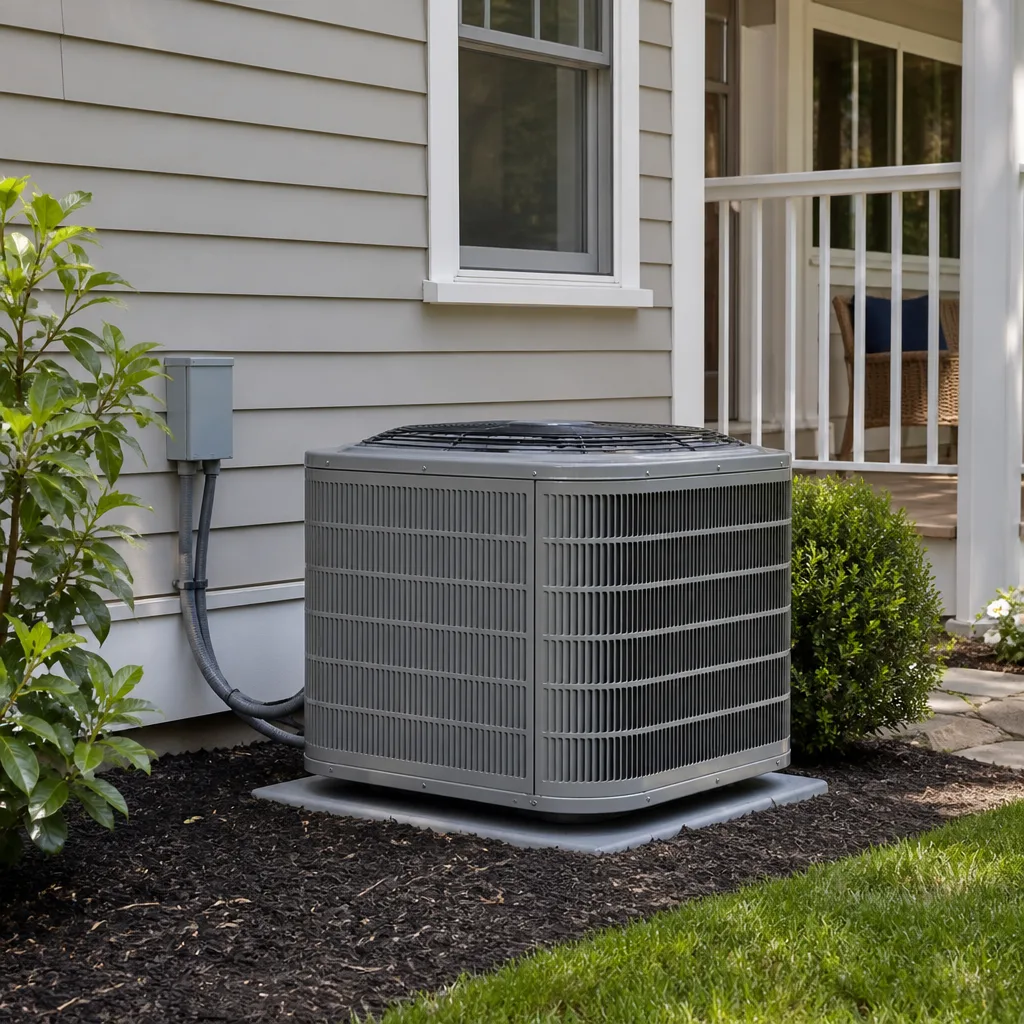 Carrier
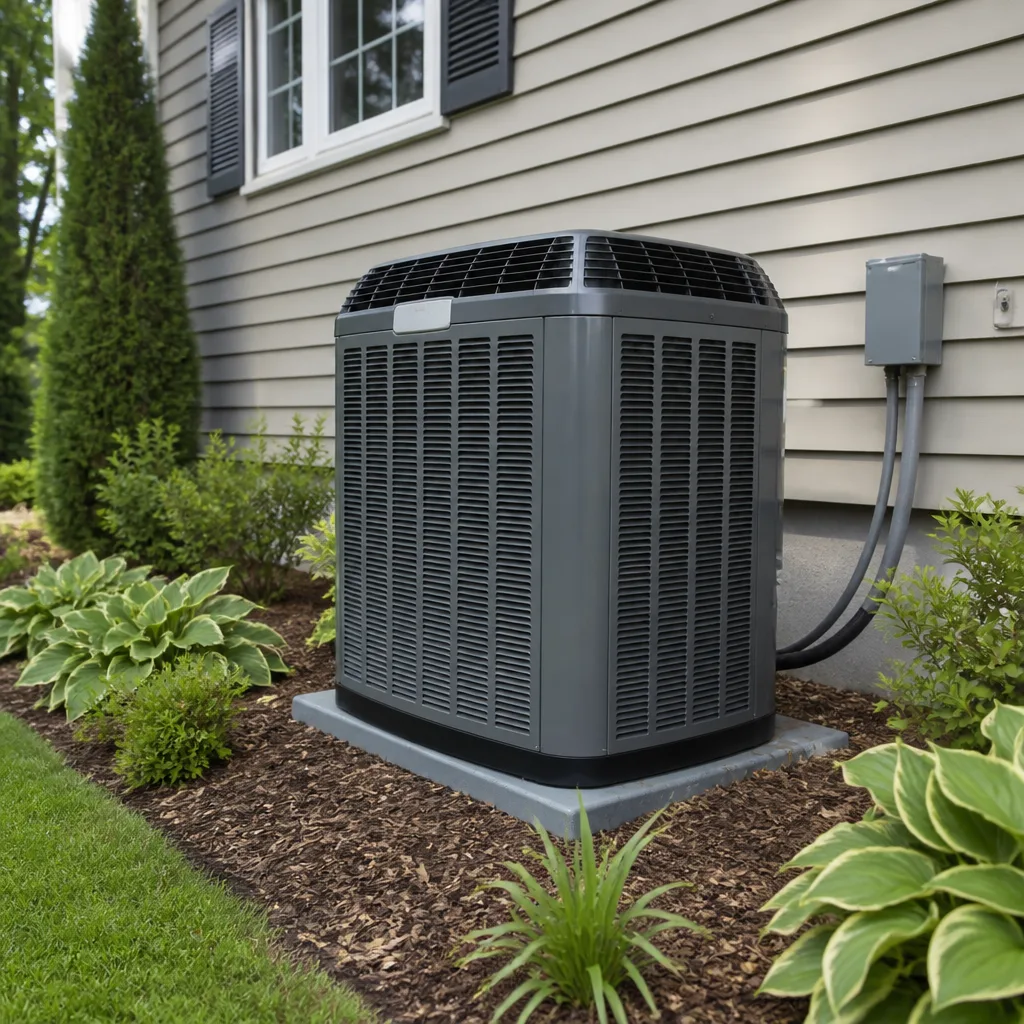 Trane
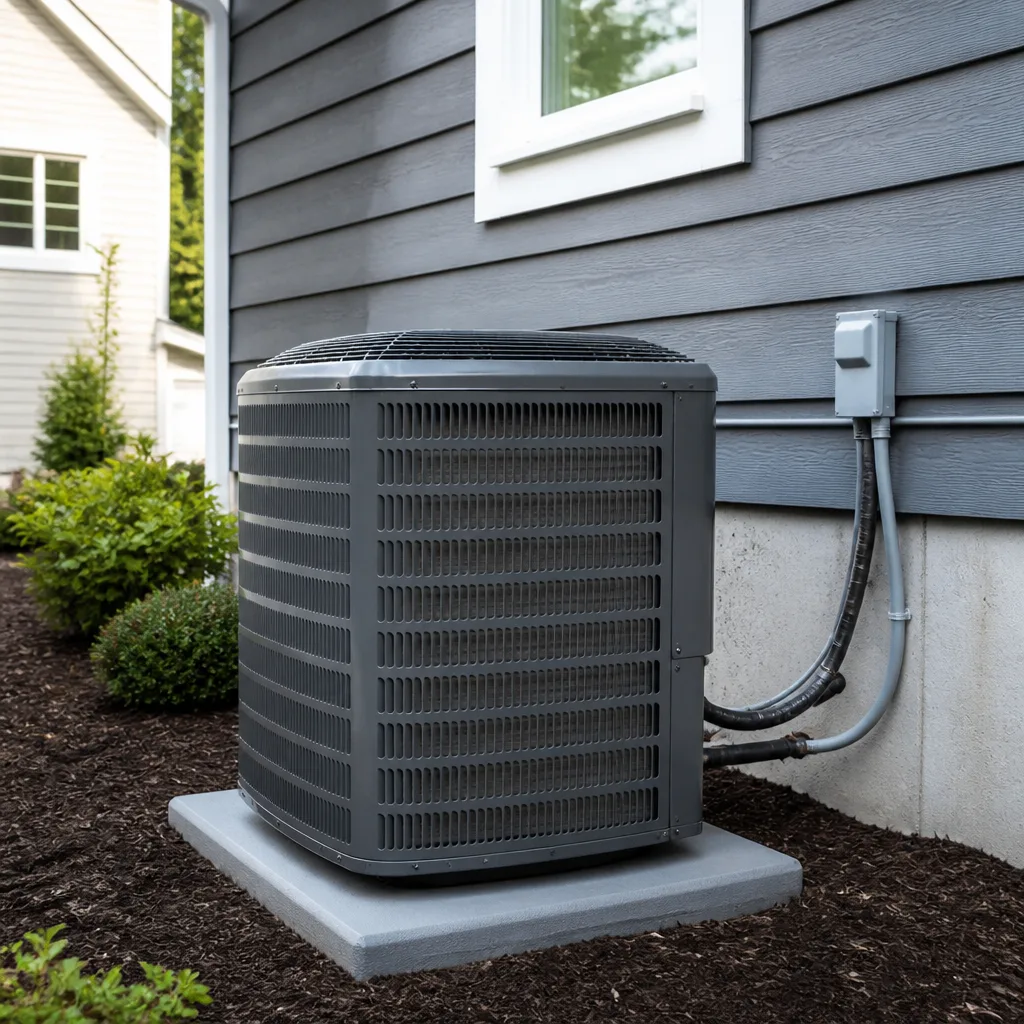 Goodman
Seasonal tune-up and full diagnostic on your Carrier, Trane, or Goodman system - readings shown to you before any repair is proposed
Diagnosis first, numbers second - you approve the repair price before a single part goes in.
Get your free estimateHVAC Cost Breakdown: The Enterprise Homeowner’s Reference for 2026
Most HVAC cost guides start with a national average and tell you to adjust from there. That’s backwards for anyone living in Enterprise. Desert heat load, equipment sizing, permit timelines, and refrigerant pricing in Clark County all push real numbers away from the national median, usually upward. Planning from a $5,500 national figure and expecting it to hold here leads to poor decisions about repair, replacement, and financing. This guide walks through what actually drives HVAC costs in Enterprise in 2026, how to read a multi-line estimate, and where the negotiable money sits.
Quick Answer
A central AC replacement in Enterprise, NV typically runs $7,200-$10,500 for a like-for-like changeout, while a system upgrade to two-stage or variable-speed equipment runs higher and depends on the load calculation and equipment line. Furnace repairs commonly fall in the $180-$650 range, and AC repairs run $175-$800 depending on the failed component. The written estimate sets the final price; everything below explains why those ranges look the way they do.
Styles & brands we work with
- AC repair
- Furnace & heating
- Heat pumps
- Ductless mini splits
- Carrier
- Trane
- Goodman
Table of Contents
- Why National Averages Miss the Enterprise Market
- Equipment Sizing and Why Ton-for-Ton Runs Larger Here
- Refrigerant Costs in 2026 After the R-410A Phasedown
- How to Read a Multi-Line HVAC Estimate
- Like-for-Like Replacement vs. System Upgrade
- Financing Math: Same-As-Cash vs. Home Equity
- Repair or Replace: The Decision Framework
- What Brand Coverage Actually Costs You
Why National Averages Miss the Enterprise Market
National HVAC cost guides are compiled from a mix of climates, housing stocks, and utility structures. That blend produces a median that fits almost no specific market. Enterprise sits in a cooling-dominated climate where the AC carries nearly all the annual load and the furnace is a light-duty backup. Equipment selected for southern Nevada has to handle a longer cooling season and higher peak design temperatures than equipment selected in, say, Ohio or the Pacific Northwest. That difference shows up directly in the equipment spec sheet, the refrigerant charge, and the labor hours a proper install takes.
Three cost inputs separate Enterprise from the national average:
- Cooling-dominated equipment sizing. Systems here are sized to a higher cooling load, which typically means the next capacity step up from what a national average assumes for a similar square footage.
- Permit and inspection requirements. Most municipalities require a permit for an AC changeout, and Clark County is no exception. The permit itself is a modest line item, but it adds scheduling time and an inspection step to every replacement.
- Refrigerant pricing. The R-410A phasedown has changed refrigerant economics nationally, but the effect lands harder in a market where every system is charged to a full cooling load rather than a lighter one.
Homeowners in neighborhoods across Enterprise, from the newer builds near the 215 to older tracts closer to the center, all feel these same three drivers. The house size and equipment vintage change the number, but the cost structure is the same. In our experience, that’s the part national guides get wrong: they tell you the price without telling you which inputs move it. Once you understand the inputs, you can read any estimate with a clear eye and ask better questions.
Equipment Sizing and Why Ton-for-Ton Runs Larger Here
A “ton” in HVAC is a measure of cooling capacity, roughly 12,000 BTUs per hour. An undersized system in an Enterprise summer will run continuously and still fail to hold the setpoint, while an oversized one will short-cycle and wear out faster. The right size comes from a load calculation, not from matching the previous unit’s tonnage, and not from a rule of thumb like “one ton per 500 square feet.” That rule of thumb is a national shortcut that breaks down when the outdoor design temperature is high and the cooling season is long.
Here’s what that means for cost. If a home needs a four-ton system instead of the three-ton figure a national average assumes for its square footage, the equipment price steps up, the coil steps up, the refrigerant charge steps up, and the electrical work may step up as well. Multiply that across the whole install and the gap between the national median and the Enterprise range is no longer mysterious. It’s arithmetic.
A proper load calculation looks at:
- Conditioned square footage and ceiling height.
- Window area, orientation, and glazing type – large west-facing glass is a big load adder in a desert climate.
- Insulation levels and attic ventilation.
- Duct location and leakage, especially in attics that reach very high temperatures.
- Occupancy and internal heat gain from appliances.
- Outdoor design temperature for the local climate zone.
We run this calculation before quoting an AC installation. Without it, any tonnage recommendation is a guess. And a guess in Enterprise is expensive, because undersizing means premature failure and oversizing means comfort complaints and higher bills. Ask any contractor to show you the load calculation they used. If they can’t, that’s your signal to look elsewhere.
Refrigerant Costs in 2026 After the R-410A Phasedown
R-410A, the refrigerant that charged most residential systems installed over the past two decades, is being phased down under federal rules in favor of lower-global-warming alternatives. That transition has changed the refrigerant line on every estimate. In 2026, the practical effects for Enterprise homeowners are:
- New equipment may use a different refrigerant than the unit being replaced, and the new refrigerant carries its own charge, pricing, and service considerations.
- R-410A remains available for existing systems, but supply is tightening and pricing reflects that. A small top-off is still reasonable; a large leak that requires a full recharge gets expensive quickly.
- Leak repair versus recharge is a live decision. If a system is low on charge, finding and fixing the leak is usually the better spend than repeatedly buying refrigerant.
What does this mean for a cost number? A refrigerant top-off on an existing system runs a modest amount, but a full recharge or a significant leak repair pushes the AC repair line item toward the upper end of the $175-$800 range. On a replacement, the refrigerant charge is baked into the installed price of the new equipment. We work with the brand you already have, so the refrigerant question is answered by the equipment in front of us, not by what we’d prefer to sell. Trane and Lennox systems in particular have specific charge requirements that a technician trained on those lines will know without guessing.
One practical note: if a 10-year-old system needs a full R-410A recharge and the compressor is also near end of life, the recharge cost is money you may not recover. That’s the moment to have an honest repair-or-replace conversation, and it’s one we have often.
How to Read a Multi-Line HVAC Estimate
A good HVAC estimate is not a single number. It’s a line-item breakdown that separates fixed costs from negotiable scope, and understanding that split is how you compare bids fairly. When two contractors quote different totals for what sounds like the same job, the difference is almost always in the scope lines, not the equipment line.
Fixed-cost line items are the ones you cannot really negotiate on:
- Equipment cost, which is set by the manufacturer and the distributor.
- Refrigerant charge.
- Permit fees, which are set by the city.
- Standard labor for the install scope.
- Disposal and recovery of the old equipment and refrigerant.
Negotiable or optional scope is where estimates diverge:
- Thermostat choice and whether programming or Wi-Fi capability is included.
- Duct modifications, sealing, or repair.
- Condensate line improvements and drain pan upgrades.
- Electrical work for a new disconnect or a higher-capacity circuit.
- Extended labor coverage versus the manufacturer’s standard parts warranty.
When you compare bids, put them side by side by line item. If one contractor includes duct sealing and another doesn’t, the totals aren’t telling you the same story. Ask each one to itemize what’s in and what’s out. A written estimate should also state the equipment model numbers so you can confirm the efficiency tier and the capacity match the load calculation. If a bid is vague on model numbers, treat the total as an estimate of an estimate.
We provide written, itemized estimates for AC installation so the homeowner can see exactly what’s fixed and what’s flexible. That transparency is worth more than a low headline number with unstated exclusions.
Like-for-Like Replacement vs. System Upgrade
A like-for-like replacement swaps the old equipment for a new system of the same type and capacity. It’s the simpler, lower-cost path, and for many Enterprise homes it’s the right one. A system upgrade moves to two-stage or variable-speed equipment, which runs at partial capacity most of the time, holds temperature more evenly, and uses less electricity during the long cooling season.
The cost difference is a real line item. Two-stage and variable-speed equipment costs more upfront, and variable-speed systems also carry a higher cost for the more sophisticated controls and the technician time to commission them properly. So the question is whether the operating savings pay back the upgrade premium.
A payback calculation at current NV Energy residential rates works like this:
- Get the estimated annual cooling cost for the like-for-like system from its efficiency rating and the home’s load.
- Get the same figure for the upgrade system.
- Subtract to find the annual savings.
- Divide the upgrade premium by the annual savings to get the payback period in years.
In a cooling-dominated market like Enterprise, that payback period tends to be shorter than it would be in a mild climate, because the system runs more hours per year and the efficiency gain compounds. But it’s not automatic. A well-insulated home with a shorter effective cooling season inside the home benefits less than a house with a large west-facing glass wall and poor attic ventilation. Run the numbers on your specific home before you decide. If the payback is inside the equipment’s expected service life, the upgrade usually makes sense. If it isn’t, the like-for-like replacement is the more honest choice, and we’ll tell you so.
Financing Math: Same-As-Cash vs. Home Equity
Same-as-cash promotions are the standard financing offer in HVAC, and they’re not always the cheaper option. A same-as-cash offer typically means no interest if the balance is paid in full within a set promotional window, and a high retroactive rate if it isn’t. The trap is the retroactive part: if you’re a month late on the payoff, interest often applies from the original purchase date, not from the missed payment.
A home equity line or a home equity loan works differently. The rate is typically lower than a standard credit card, the term is longer, and the interest is often tax-deductible under current rules, though you should confirm with a tax professional. The trade-off is that the loan is secured against your home, which carries its own risk if your circumstances change.
The decision math:
- If you can pay a same-as-cash balance in full inside the promotional window, the effective cost is zero and it’s usually the cheapest path.
- If there’s any real chance you won’t pay it off in time, the retroactive rate can make the offer more expensive than a home equity line, sometimes substantially.
- If the replacement is large and you want a predictable payment, a home equity line at a Nevada residential rate often wins on total cost even though the headline rate looks worse than “0%.”
We’ll walk through the paperwork with you and answer questions about the equipment and scope, but the financing decision belongs with you and your lender. Get both offers in writing, read the retroactive-rate language on the same-as-cash offer carefully, and compare the all-in cost over the full term.
Repair or Replace: The Decision Framework
Repair-first is the right default. Most failed AC calls are repairable, and a technician who jumps straight to replacement is a technician you should question. The repair-or-replace decision comes down to four factors, and once you weigh them together the answer is usually clear.
- Age of the system. Equipment near the end of its expected service life with a major component failure is usually a replacement candidate. Equipment with years of life left is usually a repair.
- Cost of the repair relative to replacement. A repair that costs a large fraction of a new system, on an aging unit, is often money you won’t recover.
- Refrigerant situation. A system that needs a full R-410A recharge plus a leak repair, on top of other issues, tilts toward replacement in 2026 pricing.
- Comfort and efficiency. If the system never cooled well in the first place, the problem may be sizing or ductwork, and a like-for-like replacement won’t fix it.
We approach AC repair with a repair-first mindset. Our technicians assess whether repair is viable before steering toward replacement, because that’s the honest answer most of the time. When replacement really is the right call, we’ll explain exactly why and what the new system will do differently. For a furnace call, the same framework applies: AC Repair Enterprise covers furnace repair as part of the same lifecycle, so you don’t need a second contractor as your system ages.
One thing we won’t do is tell you to replace a repairable system to hit a sales target. The recommendation follows the equipment.
What Brand Coverage Actually Costs You
Brand coverage affects cost in a way most homeowners don’t think about. A technician who only knows one manufacturer’s equipment tends to recommend that brand, whether or not it’s the right fit for your home. A technician trained on nine leading lines can diagnose the equipment in front of them and recommend the option that fits your existing setup and budget. We’re certified to service nine major HVAC brands: Carrier, Trane, Lennox, Goodman, Rheem, York, Daikin, Bryant, and American Standard. That means a Goodman system in a starter home and a Trane system in a larger property both get diagnosed on their own terms, not pushed toward a preferred product line.
The practical effect on your bottom line is in the diagnosis and the parts availability. When a technician has to learn a brand’s quirks on your job, you pay for that learning. When they already know the control board layout, the common failure points, and the correct refrigerant charge for that model, the diagnostic time shortens and the repair is more likely to be correct the first time. A Goodman unit with a known capacitor failure is a different repair than a Lennox communicating system with a control fault, and the estimate should reflect that.
This is why we describe our approach as brand-agnostic. The recommendation follows the equipment, not a catalog. If you’ve inherited a system you didn’t choose, that’s the situation we’re built for. We work on the brand you already have, and we’ll give you the honest answer on whether to keep it running or replace it. For homeowners across Enterprise, that’s the service that matters most.
Common Mistakes to Avoid
- Planning from a national average. A $5,500 national figure doesn’t account for the higher cooling load and refrigerant demand a desert climate creates. Use the Enterprise ranges in this guide as your planning anchor, then get a written estimate.
- Skipping the load calculation. A tonnage match without a load calculation is a guess. In Enterprise’s high heat, an undersized system fails early and an oversized system short-cycles. Ask to see the calculation.
- Comparing totals instead of line items. Two estimates with the same bottom line can include entirely different scope. Compare fixed costs and negotiable scope separately, and confirm model numbers on both bids.
- Taking a same-as-cash offer without reading the retroactive-rate clause. The interest that applies if you don’t pay in full inside the window is often much higher than a home equity line. Read the fine print before signing.
- Recharging refrigerant without finding the leak. A system that’s low on charge is losing it somewhere. Paying for a full R-410A recharge without finding the leak means you’ll pay again soon.
- Replacing a repairable system on a contractor’s recommendation alone. Get a repair-first diagnosis. If the technician can’t explain why repair isn’t viable, get a second opinion.
- Assuming a bigger brand costs more. With nine brands covered, we can often match the right equipment to your budget rather than steering you toward a premium line you don’t need.
See the difference
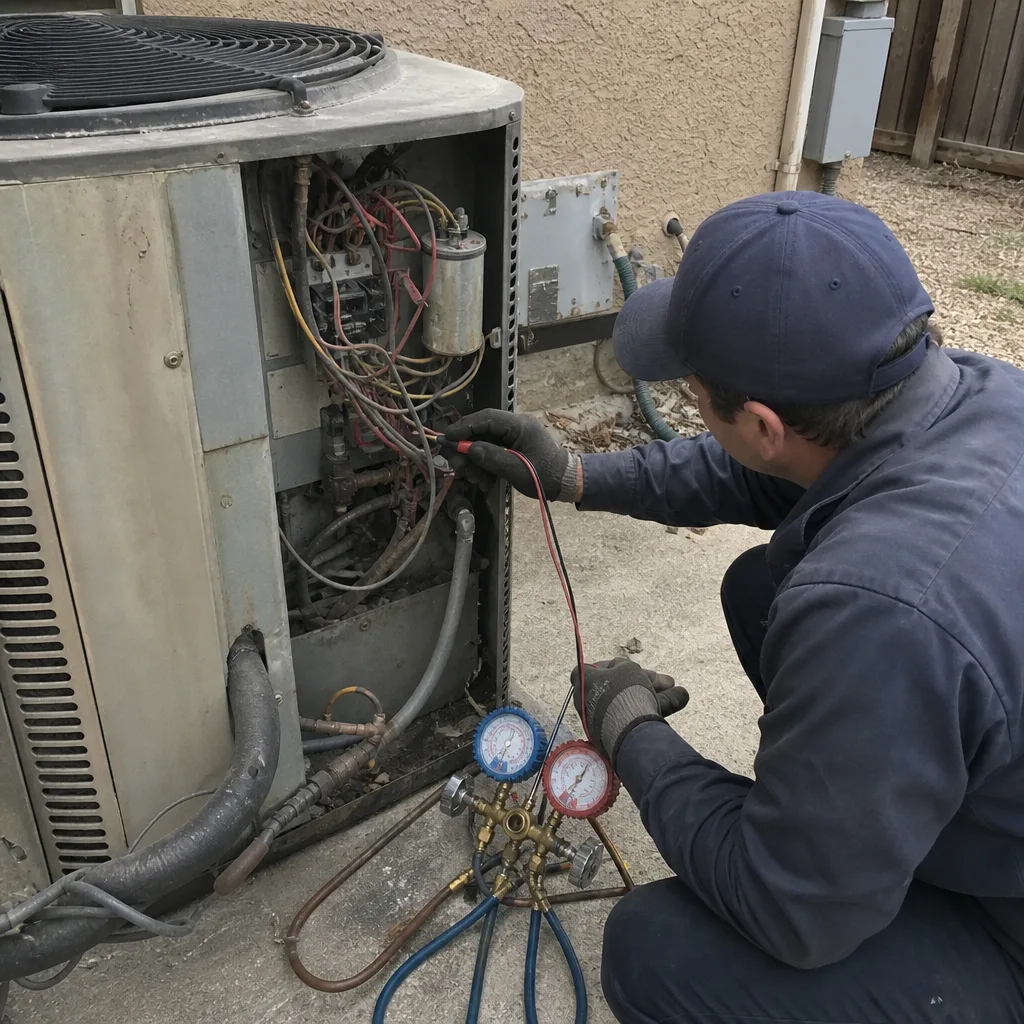 Before
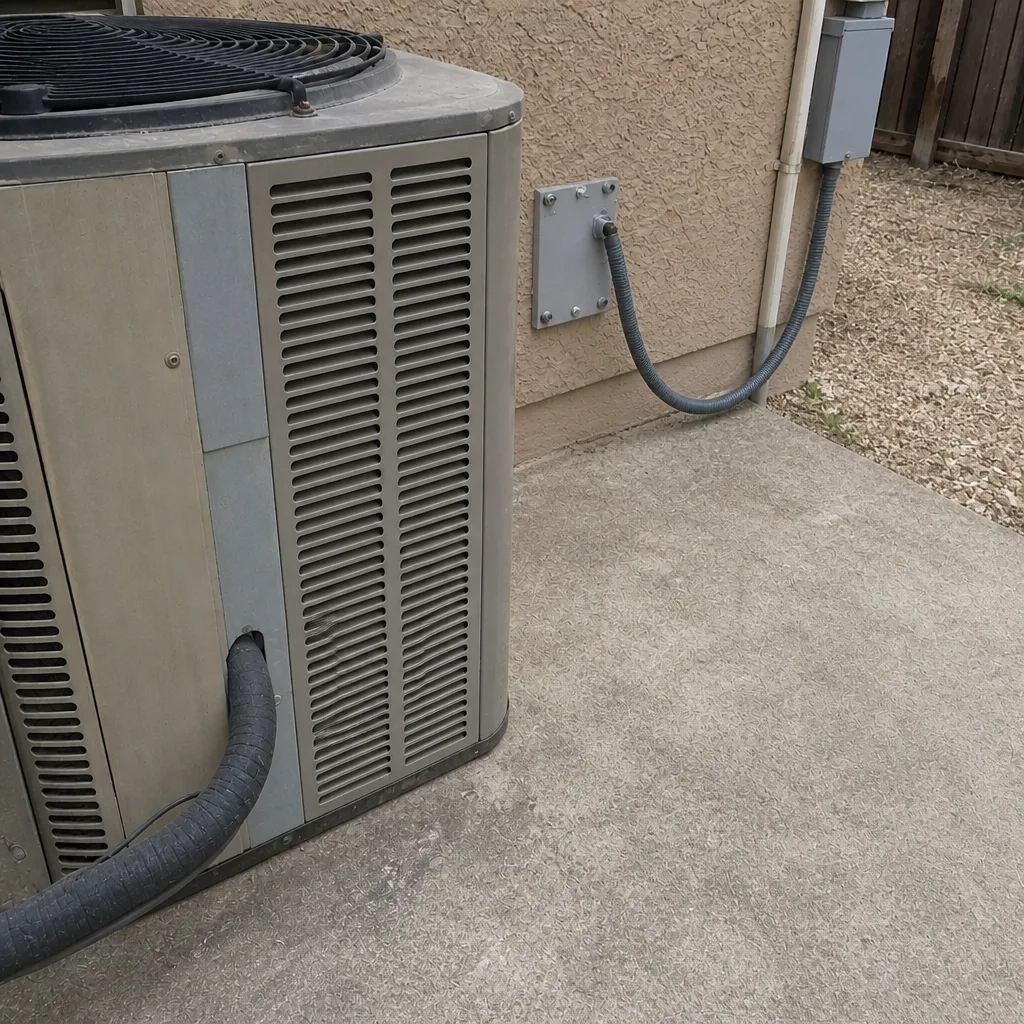 After
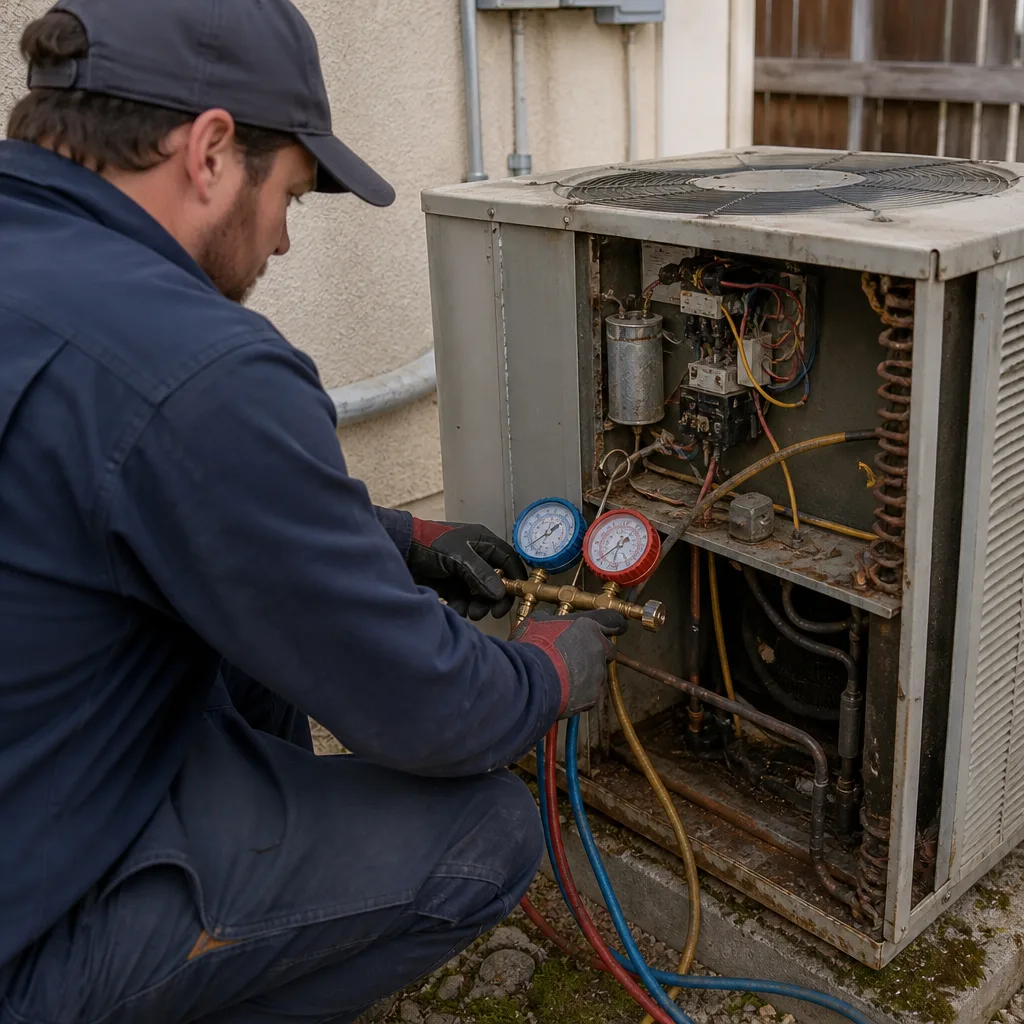 Before
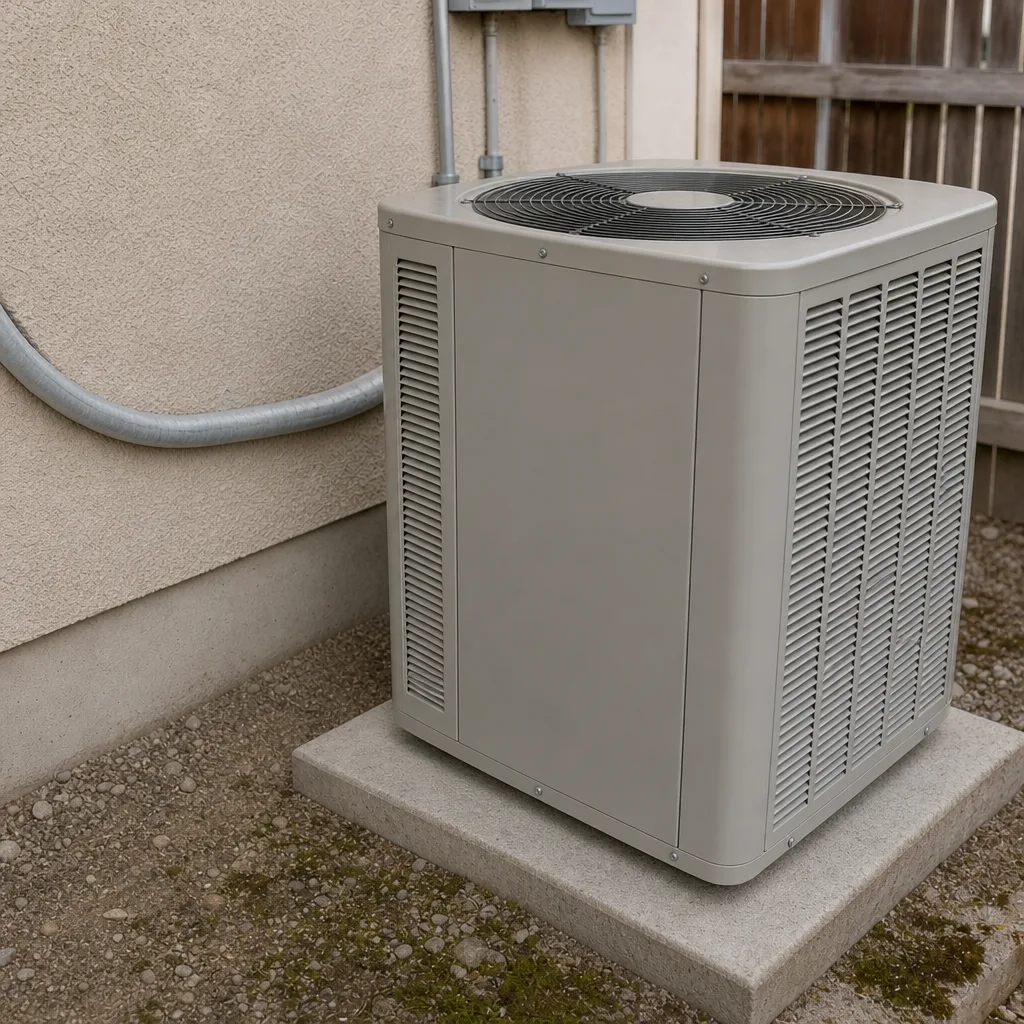 After
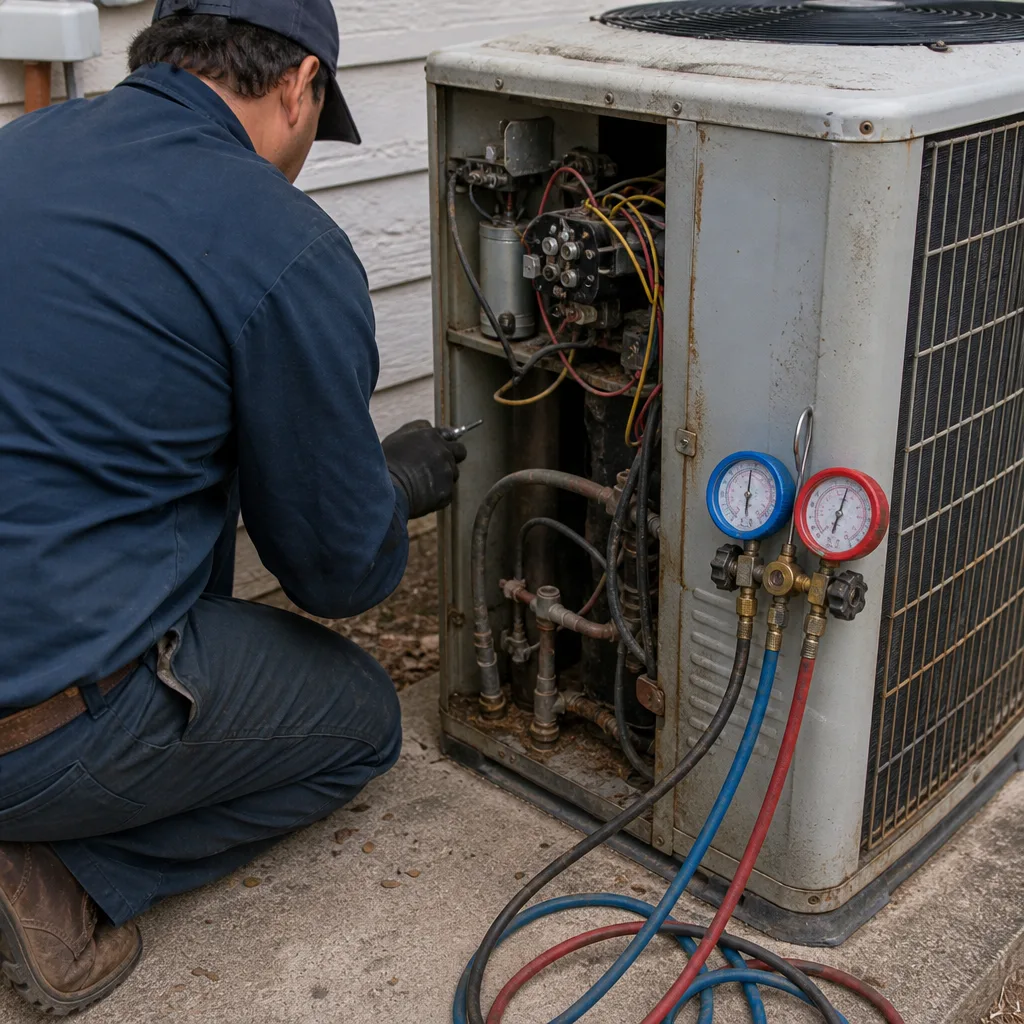 Before
 After
When to Call a Professional
Call a professional when the system isn’t cooling, when you hear unusual noises from the outdoor unit, when the breaker trips repeatedly, or when the system runs but never reaches the setpoint. Refrigerant work, electrical diagnosis inside the air handler, and anything involving the compressor require trained hands. If you smell burning or see scorch marks near the disconnect, shut the system off at the breaker and call. Our technicians have up to 12 years of experience and are trained on the equipment you already have. AC Repair Enterprise offers free estimates in Enterprise – call (833) 632-6348 to book a diagnostic visit. We answer 24/7, and fast dispatch runs from 7am to 7pm, Sunday through Friday. A call outside dispatch hours is booked into the next opening.
Frequently Asked Questions
A like-for-like central AC replacement in Enterprise typically runs $7,200-$10,500, and a system upgrade to two-stage or variable-speed equipment runs higher. The wider range reflects equipment sizing for high cooling load, permit and inspection requirements, and refrigerant pricing after the R-410A phasedown. Call (833) 632-6348 for an exact quote – estimates are free.
The national average blends climates, and it underestimates the load a cooling-dominated desert market puts on equipment. Larger-capacity equipment for higher cooling load, a full refrigerant charge, and permit and inspection steps all push the Enterprise range above the national median. Every one of those inputs is itemizable on a written estimate.
Repair is usually the right answer unless the system is near end of life, the repair costs a large fraction of a new system, or it needs a full R-410A recharge plus other work. Our technicians assess repair viability before recommending replacement, and the recommendation follows the equipment, not a preferred product line. Call (833) 632-6348 to get a diagnostic visit booked.
Rebate programs change year to year, and we won’t quote a number we haven’t confirmed. What we will do is walk through any current program and help you complete the paperwork as part of a system replacement. Call (833) 632-6348 and we’ll cover what’s available and what you need to apply.
We answer 24/7, and fast dispatch runs from 7am to 7pm, Sunday through Friday. A call outside dispatch hours is booked into the next opening. If the system is down in extreme heat, that’s a health issue, not just a comfort one, so call as soon as you notice the problem. Call (833) 632-6348 – estimates are free.
Furnace repairs in Enterprise commonly fall in the $180-$650 range depending on the failed component, though the written estimate sets the final price. The furnace here is a light-duty backup to the cooling system, so furnace repair tends to be a smaller line item than AC work. Call (833) 632-6348 for an exact quote – estimates are free.
It’s worth it only if you’re confident you can pay the full balance inside the promotional window. If the payoff slips, a high retroactive rate often applies from the original purchase date, which can make the offer more expensive than a home equity line. Get both offers in writing and compare the all-in cost before deciding.
The Bottom Line
HVAC costs in Enterprise are not the national average, and they shouldn’t be planned that way. Higher cooling load drives equipment sizing up, refrigerant pricing after the R-410A phasedown changes the repair math, and permit and inspection steps add time to every replacement. The way to control the number is to understand the inputs: get a load calculation, read your estimate by line item, weigh repair against replacement on age and cost, and run the payback math before you upgrade or finance. If you need a technician who works on the brand you already have and will give you the honest repair-or-replace answer, call AC Repair Enterprise at (833) 632-6348. Free estimates, written itemized quotes, and nine brands one call.
Written by the team at AC Repair Enterprise.