
Last updated November 15, 2026
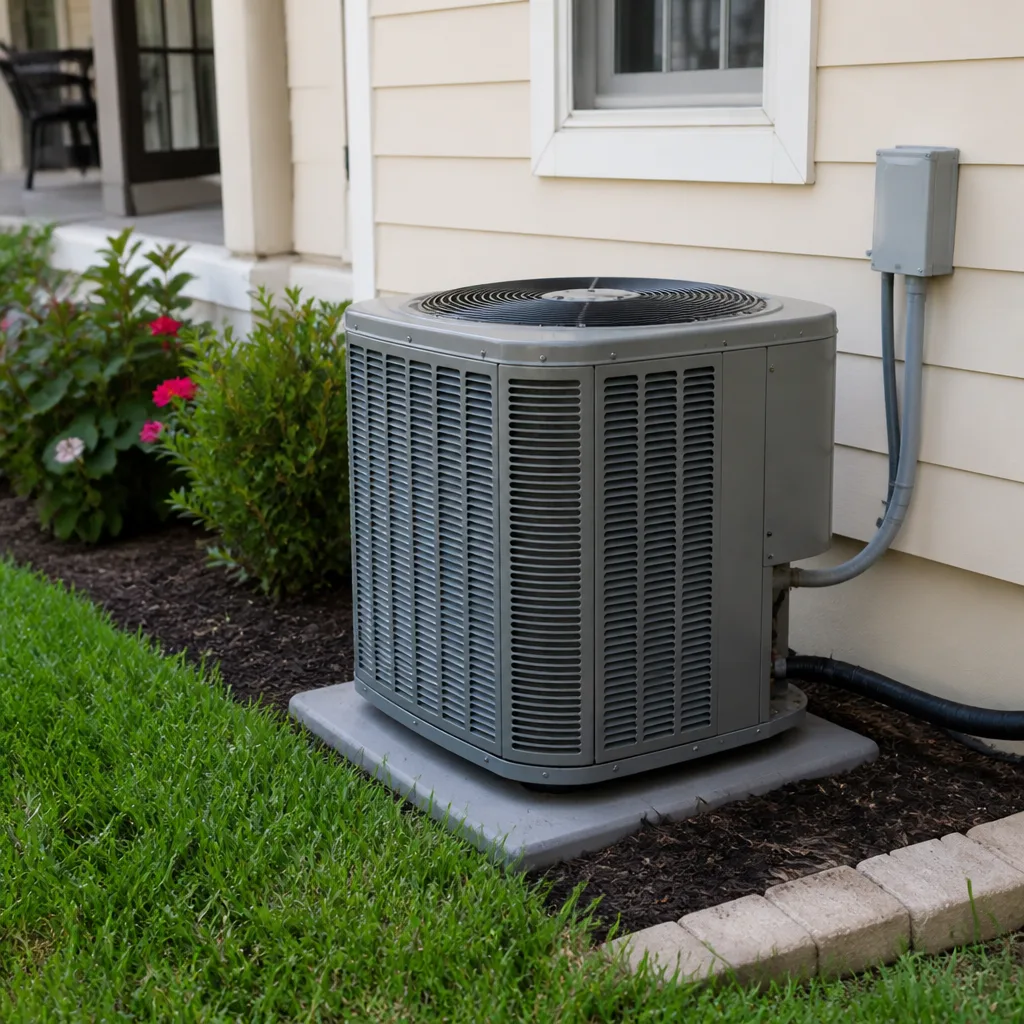 AC repair
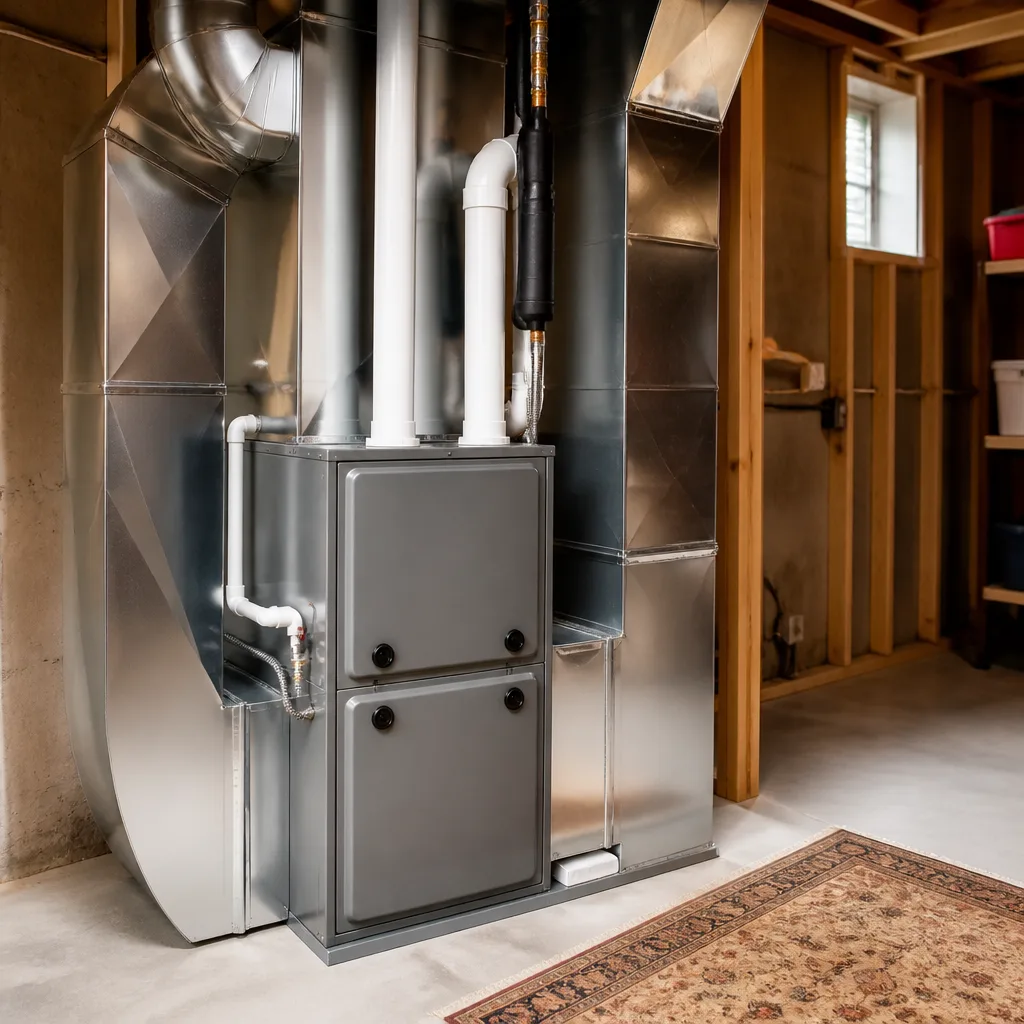 Furnace & heating
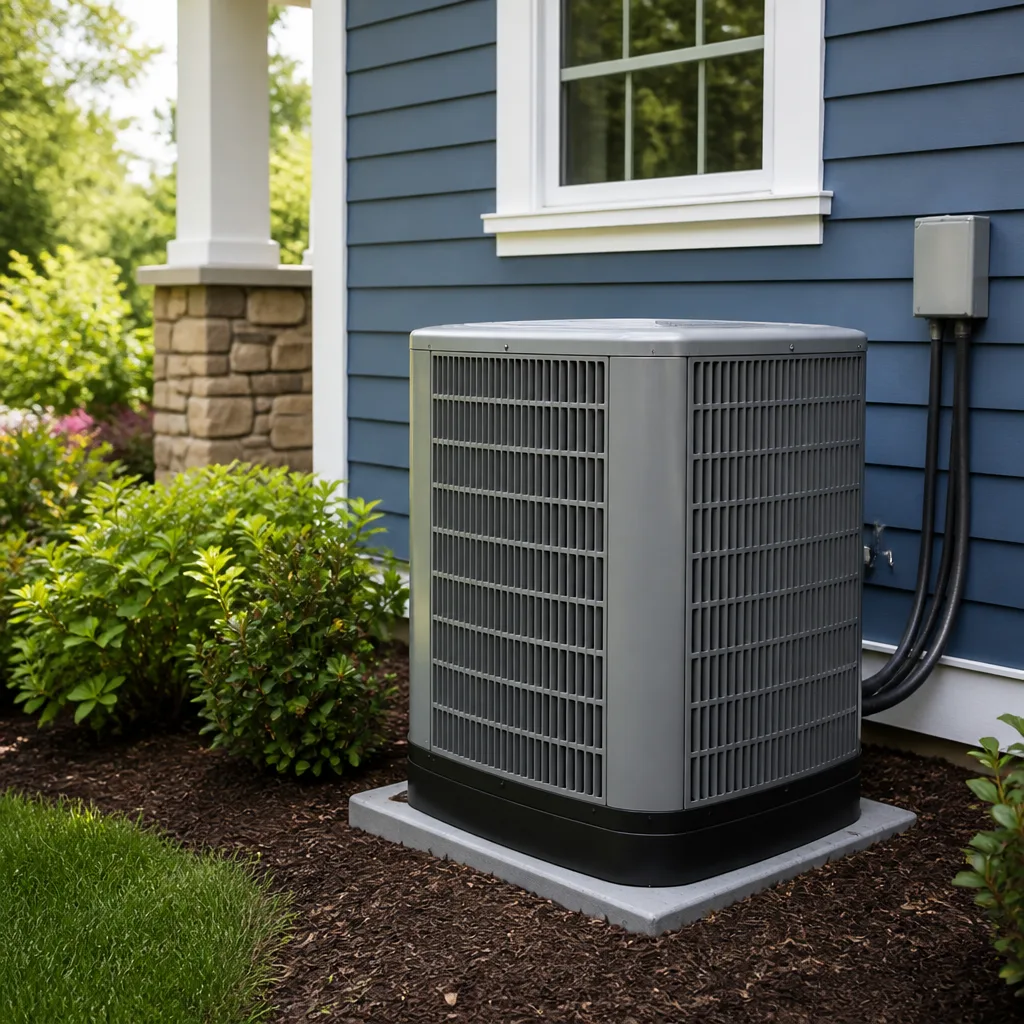 Heat pumps
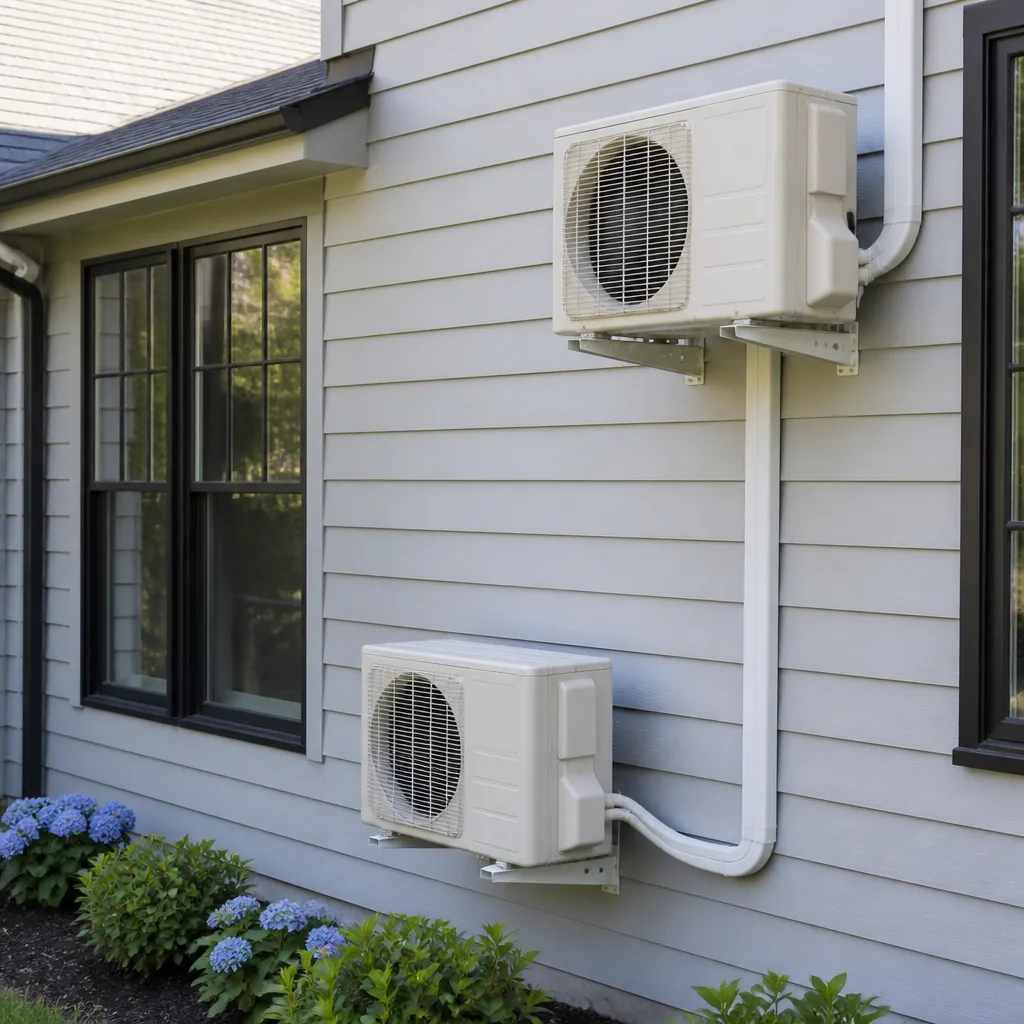 Ductless mini splits
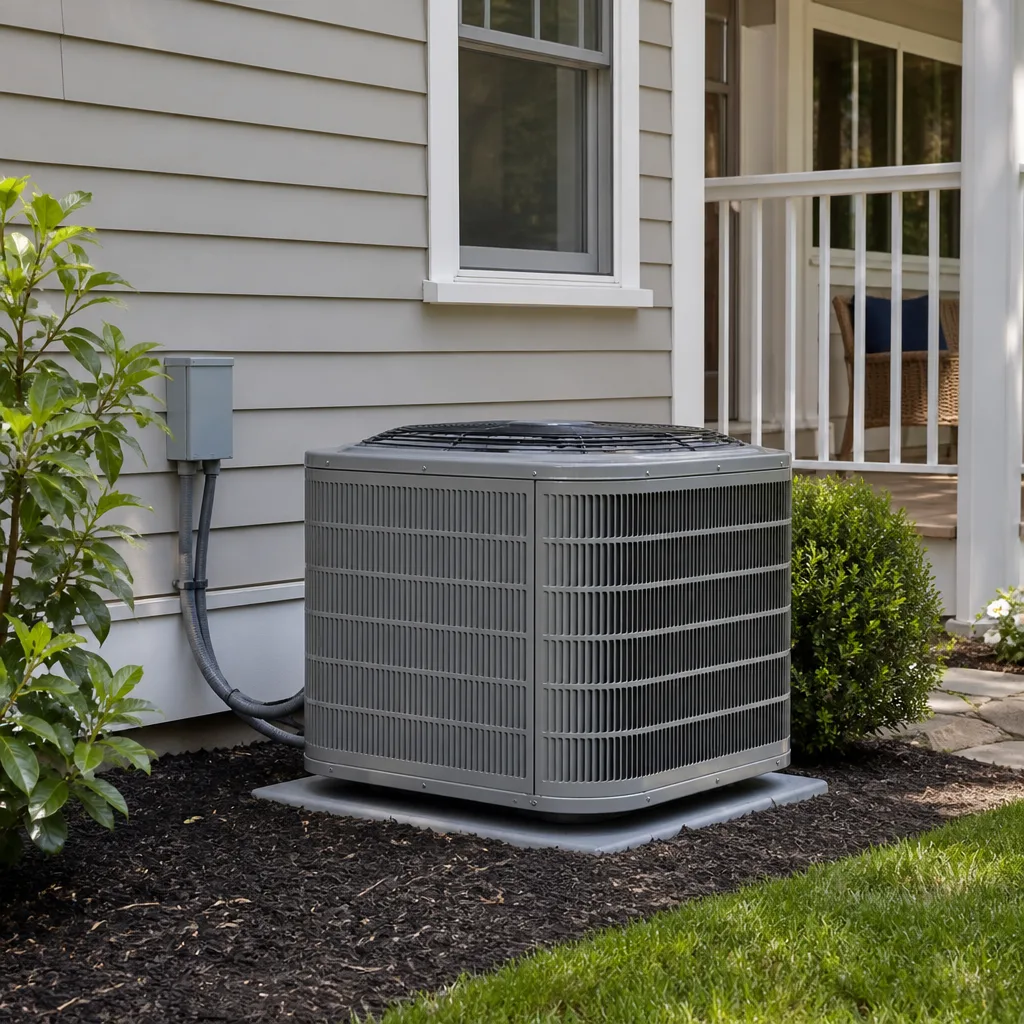 Carrier
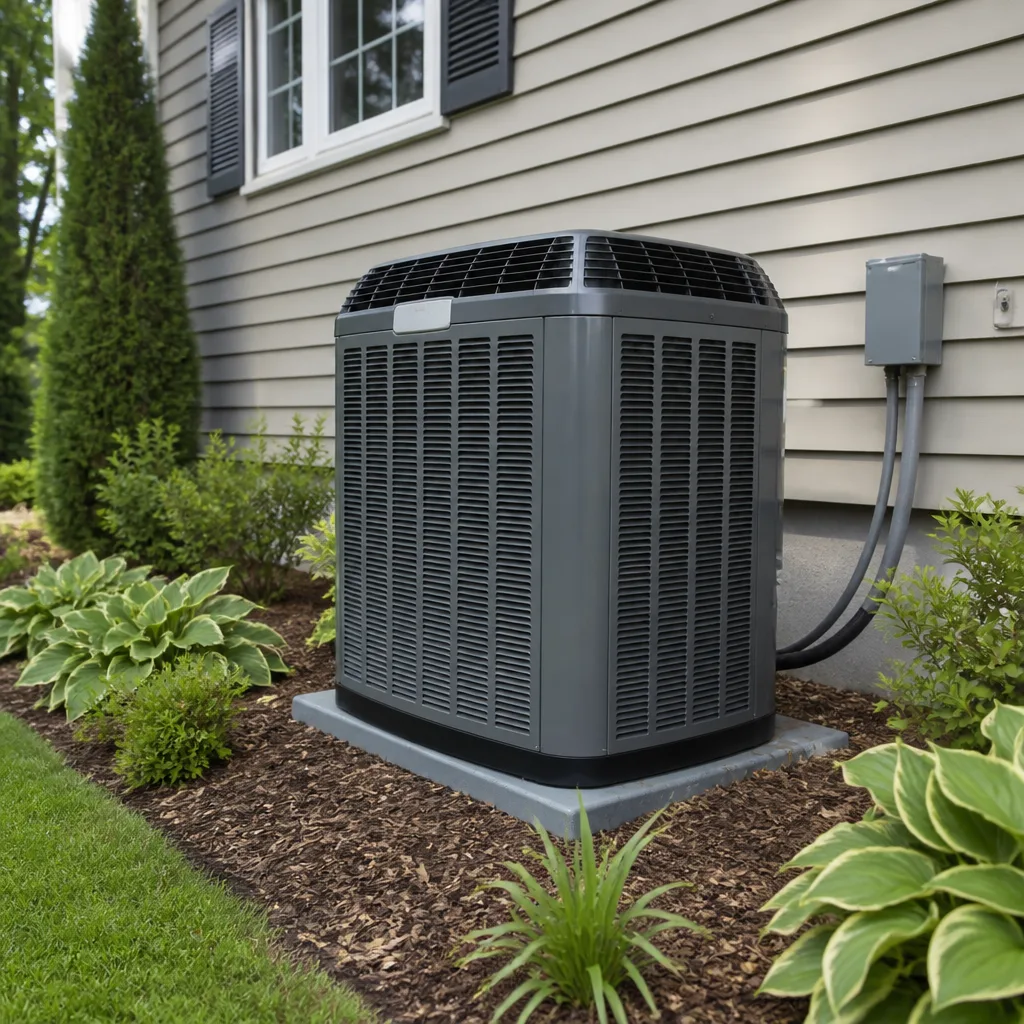 Trane
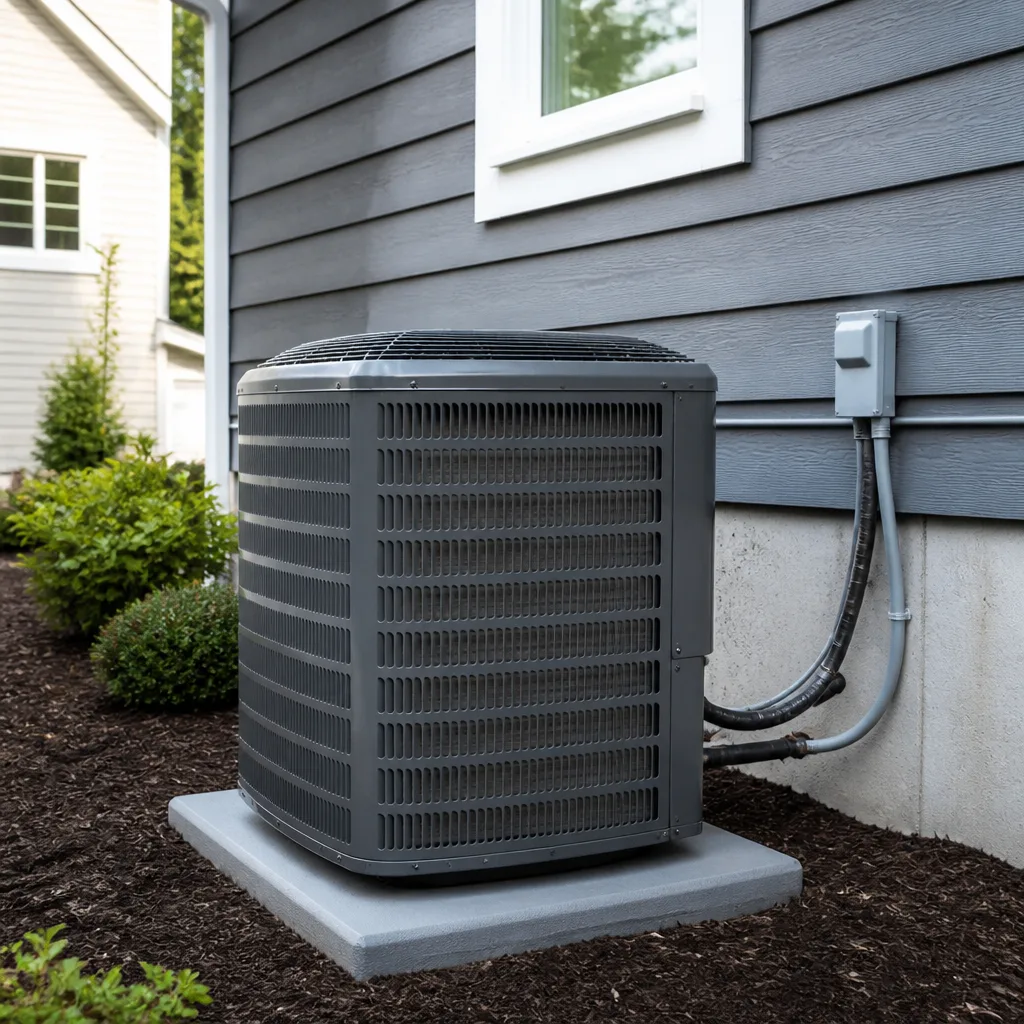 Goodman
Seasonal tune-up and full diagnostic on your Carrier, Trane, or Goodman system - readings shown to you before any repair is proposed
Diagnosis first, numbers second - you approve the repair price before a single part goes in.
Get your free estimateAC Repair Maintenance Checklist for Enterprise Homeowners
Most AC maintenance checklists floating around online were written for a temperate suburb with mild summers and four distinct seasons. They assume your condenser sits on level soil, your refrigerant lines hide from the sun, and your coils only see ordinary household dust. None of that holds up in Enterprise. Here, UV exposure is relentless for most of the year, the soil is alkaline caliche that expands and contracts with moisture, and dust finds its way into every exterior component faster than a generic twice-a-year schedule accounts for. This guide gives you a maintenance calendar built around the conditions your system actually lives in, plus the checks you can do yourself to walk into a service call already knowing what’s going on.
Quick Answer
An AC maintenance checklist for an Enterprise home should include monthly filter checks, coil cleaning every two to three months during cooling season (not twice a year), quarterly inspection of refrigerant line insulation for UV cracking, and a pre-summer condenser pad check for caliche heave. A full professional tune-up once a year before the first sustained heat, plus a filter and line-set check in fall, keeps most systems ahead of the failure curve in this climate.
Styles & brands we work with
- AC repair
- Furnace & heating
- Heat pumps
- Ductless mini splits
- Carrier
- Trane
- Goodman
Table of Contents
- Why a Generic Checklist Falls Short in Enterprise
- The Month-by-Month Maintenance Calendar
- Coil Cleaning: What Enterprise Dust Really Demands
- Inspecting Refrigerant Line Insulation for UV Damage
- Condenser Pad Inspection and Caliche Heave
- What to Verify Before a Technician Arrives
- What Brand Coverage Means for Your Maintenance Visit
- Common Mistakes to Avoid
- When to Call a Professional
- Frequently Asked Questions
Why a Generic Checklist Falls Short in Enterprise
A standard spring tune-up checklist has around a dozen items. Most of them are fine as far as they go. What they miss are the three conditions that shape equipment life in Enterprise: sustained UV intensity, alkaline caliche soil, and a dust load heavier than the manufacturer’s maintenance schedule assumes. Add those three variables and the same system needs roughly five more checks than the recycled list provides.
UV is the first problem. Outdoor components, refrigerant line insulation, and condenser wiring all take direct sun for most of the year in Enterprise. Foam insulation on a line set will chalk and crack long before the foam itself is old, and once it cracks, the line runs hotter and the compressor works harder to do the same job. A generic checklist never mentions line insulation because in most climates it lasts. Here it doesn’t.
Caliche is the second. The soil around many Enterprise homes is highly alkaline, drains slowly, and expands when it takes on water. That expansion can lift one corner of a concrete condenser pad and drop another. A pad that’s tipped even slightly puts stress on the refrigerant lines that connect the unit to the house, and that stress builds over seasons. No generic PDF has “check the pad for heave” on it.
Dust is the third. Filter changes stay the same, but coil cleaning is a different job here. Coils clog at the fin face faster, which drops the system’s efficiency before anything actually breaks, so homeowners often don’t notice until a hot stretch pushes the unit into a struggle. A schedule calibrated to a milder climate will leave the coil fouled for weeks before the next scheduled visit.
This is why a maintenance routine for an Enterprise home should be written for this climate, not copied from a manufacturer manual written for a national average. The remainder of this guide is the version we’d give a neighbor.
The Month-by-Month Maintenance Calendar
Instead of a spring/fall split, split the year into what actually happens in Enterprise: a pre-season ramp, a peak cooling stretch, and a hot-soil transition where the ground shifts under the condenser. Here’s how that maps to tasks.
January through February: pre-season prep
- Change the filter and note the date on the edge of the new one.
- Walk the exterior and look at the condenser pad for settling or tilt.
- Look along the refrigerant lines where they exit the wall for cracked or missing insulation.
- Clear the two feet of space around the condenser so airflow isn’t blocked.
- Book the professional tune-up before the schedule fills up in late spring.
March through May: the first real cooling load
- Rinse the condenser coil fins gently from the inside out.
- Replace the filter if you can see a grey film on the return face.
- Listen for short cycling at startup and note whether the unit takes longer to cool than last year.
- Check the condensate drain line for standing water; a clog in early heat is common.
June through September: peak season
- Change filters every 30 to 45 days if you have pets or an open-window habit.
- Rinse the coil fins every three weeks in the dustiest stretch.
- Watch for ice on the indoor coil or the suction line; that’s a red flag, not a “wait and see”.
- Confirm the pad is still level after monsoon-season soil movement.
October through December: cool-season wrap-up
- Change the filter once before heating season begins.
- Inspect line insulation again; UV damage continues in cooler months.
- Look for rust streaks on the pad or the cabinet, which point to moisture sitting where it shouldn’t.
- Book furnace service in Enterprise if you haven’t had the heating side checked this year.
The exact month you perform each item can slide by a few weeks, but the order matters. Line and pad checks belong before the cooling season, not after it.
Coil Cleaning: What Enterprise Dust Really Demands
Manufacturer minimums typically suggest coil cleaning once or twice a year. In Enterprise, that schedule undershoots during cooling season. The dust here carries fine particles that lodge between the fins and build a matted layer faster than the air can push through. Once that layer forms, the system still runs, still cools, and still draws the same electricity, but the compressor works harder for the same result.
During the peak cooling stretch, plan on rinsing the outdoor coil fins every three weeks and doing a deeper fin inspection every second month. If you notice any of the following, clean sooner:
- The top of the unit feels hot to the touch well after it shuts down.
- You can see a visible grey haze across the fins when you look through them at an angle.
- The system runs noticeably longer to reach the same thermostat set point.
- You can hear the compressor cycling more than usual.
The indoor coil, mounted inside the air handler, is a different story. Its fins sit behind the filter, so cleaning is mostly a matter of keeping the filter fresh and letting a technician handle the coil itself during an annual tune-up. Don’t try to open the air handler cabinet to clean the indoor coil yourself; the coil is connected to refrigerant lines under pressure, and a wrong move there is a refrigerant problem, not a dust problem.
Roof-mounted units on light-commercial or flat-roof residential buildings in Enterprise collect even more dust and often less attention. If your system lives on the roof, add a monthly exterior coil check to the schedule. Outdoor units at ground level at least get rain to rinse them; roof units don’t always.
For a full inspection and coil cleaning as part of a tune-up, AC repair in Enterprise covers the indoor and outdoor coil, the blower, and the electrical side of the unit. That’s the right time to catch a coil that’s already started to foul before the summer heat peaks.
Inspecting Refrigerant Line Insulation for UV Damage
The insulated copper line that runs from the condenser to the house is one of the most overlooked parts of any system, and in Enterprise it’s one of the most exposed. Sunlight breaks down the closed-cell foam on that line over a few years. When the foam cracks or falls away, the copper runs hotter, and the compressor has to work harder to move refrigerant through a hotter line. The system still cools, so most homeowners never notice until an efficiency problem shows up as a compressor strain or a longer runtime.
Here’s what to look for. You don’t need tools.
- Walk the full run. Follow the insulated line from the condenser wall penetration to the unit. Look at every inch, not just the visible top.
- Check the color. Foam that’s still intact is uniform in color. UV-damaged foam turns chalky, lighter, and slightly powdery to the touch.
- Look for cracks or gaps. Small cracks at the joints or near the wall penetration are the first place damage shows.
- Feel for bare copper. If you can feel the metal through the foam, or see it poking out, the insulation has already failed on that section.
- Check the tie wraps. The plastic ties that hold the insulation in place degrade in UV too and can cut into the foam as they dry out.
Re-insulating a line set is straightforward for a technician and inexpensive relative to a compressor repair. It’s also one of those jobs that’s almost never on a generic checklist, which is why it gets caught late.
If your system uses Carrier, Trane, or Lennox equipment, the line set routing and insulation thickness is set by the manufacturer’s spec, so the replacement section should match, not just be “any foam that fits.” Our technicians work on those brands regularly and match the specification before wrapping a new section.
Condenser Pad Inspection and Caliche Heave
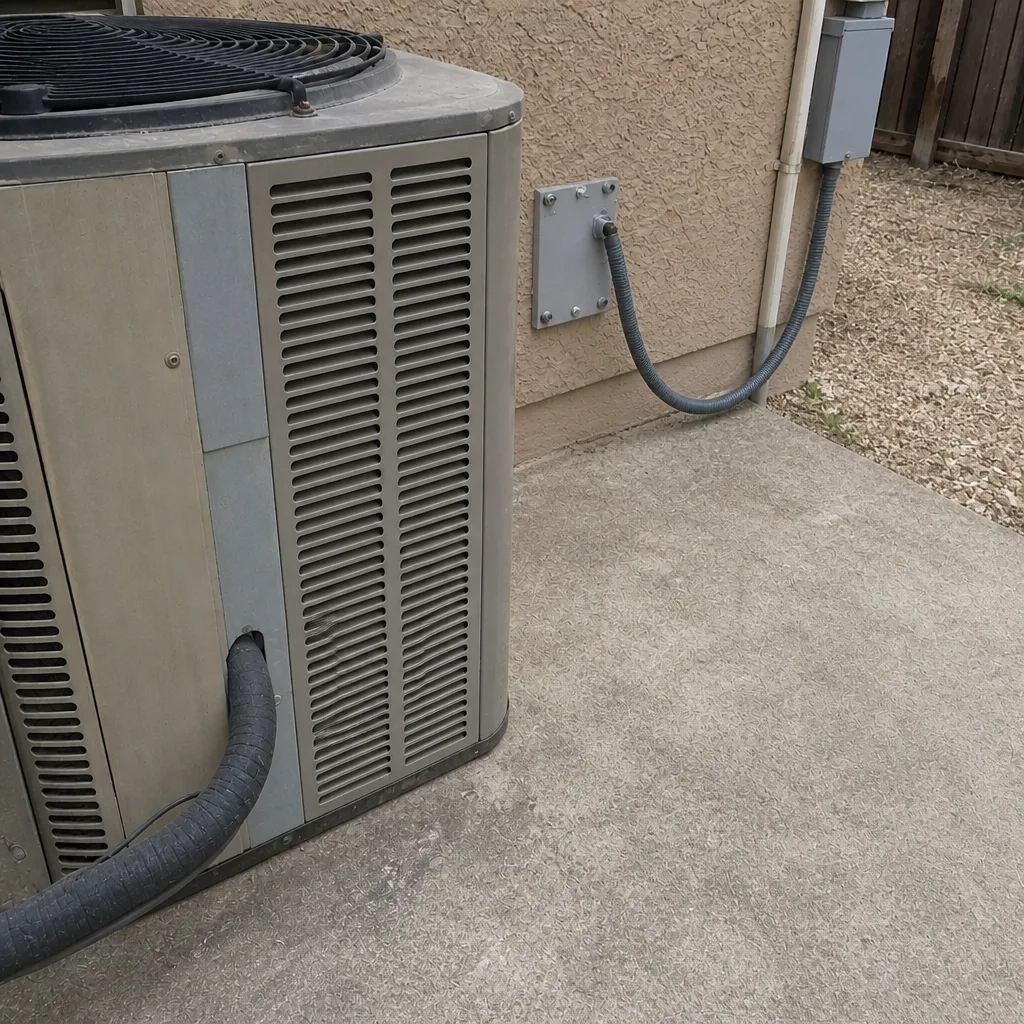
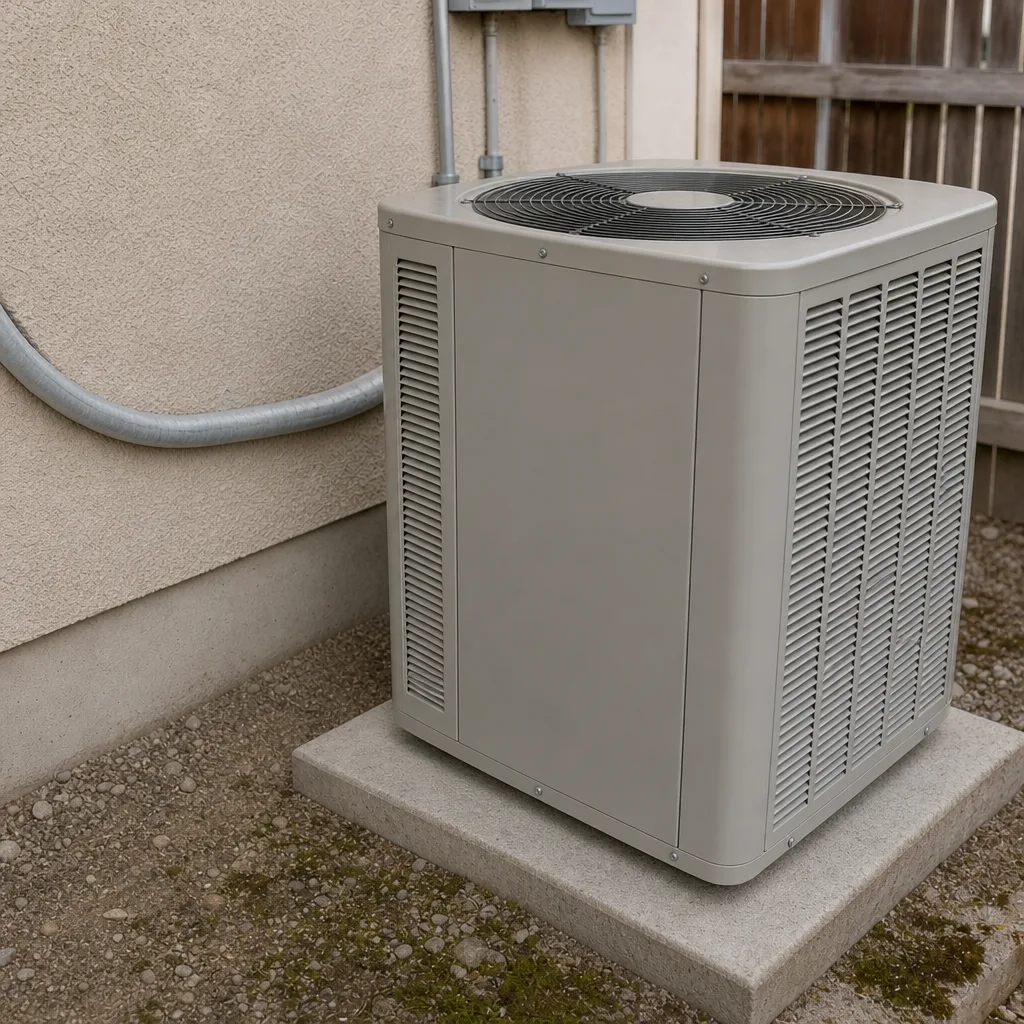
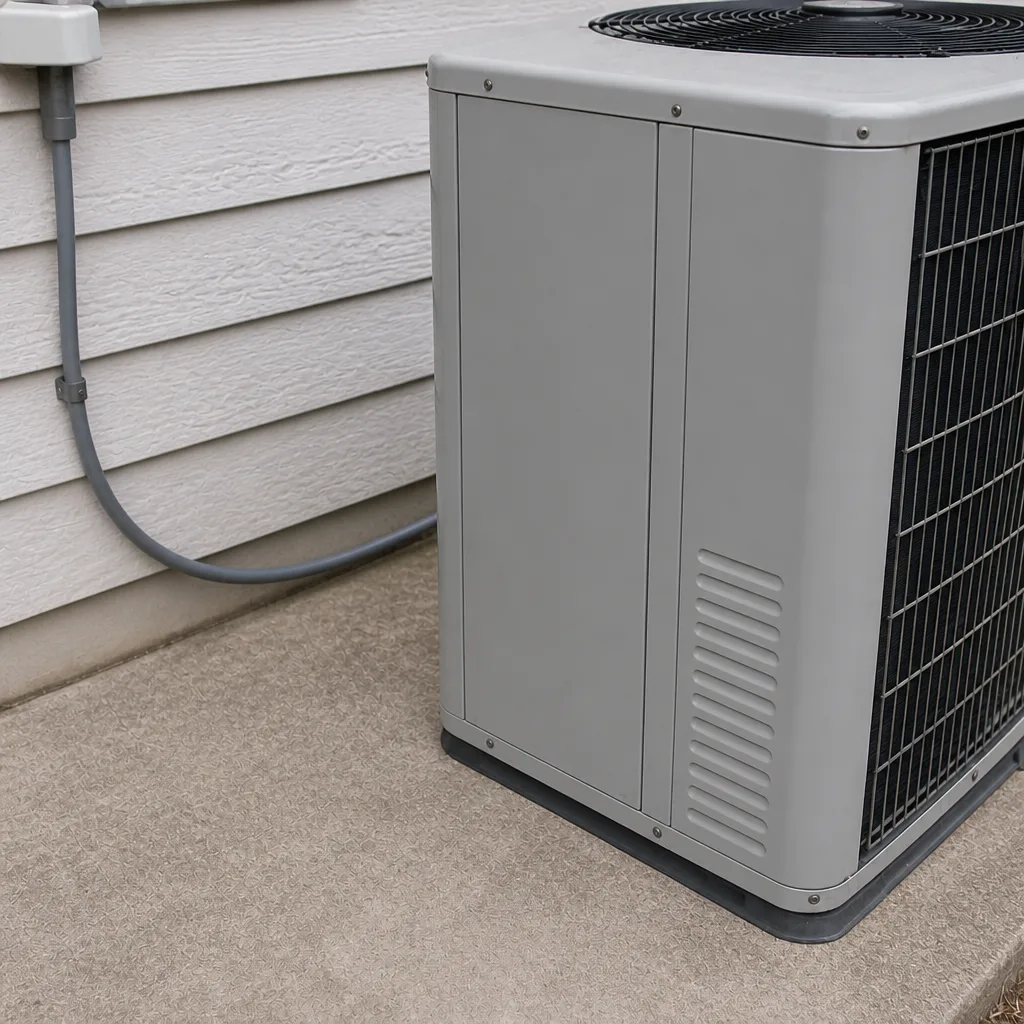
A condenser doesn’t need much from its pad, but what it does need, it needs absolutely: it needs to be flat, stable, and not moving. In Enterprise, the soil underneath that pad is often caliche, and caliche is a different animal from ordinary topsoil. It’s clay-heavy, alkaline, and expands when it takes on moisture. During a wet stretch, one corner of a slab or plastic pad can lift while the others stay put. During dry spells, the reverse happens.
What you’re looking for on a pad check:
- Tilt. Lay a level on the pad in two directions. Even a slight slope counts as misalignment.
- Cracks. Hairline cracks are common and usually harmless. Wide cracks that run through are a sign the pad has shifted or settled.
- Sunken corners. If you can see daylight under one edge of the pad, the soil below has washed or settled.
- Cabinet lean. The condenser cabinet should sit vertical. If the unit itself is leaning, the pad has already moved.
Misalignment matters because of the refrigerant lines. Those lines are fixed at one end to the condenser and at the other to the interior coil. When the pad tilts, the flexible section of line takes the strain, and over seasons that strain can slowly crack the line or work a fitting loose. The symptom doesn’t show up right away; it shows up as a refrigerant leak two summers later. That’s why the pad check belongs on the calendar before the cooling season, not after.
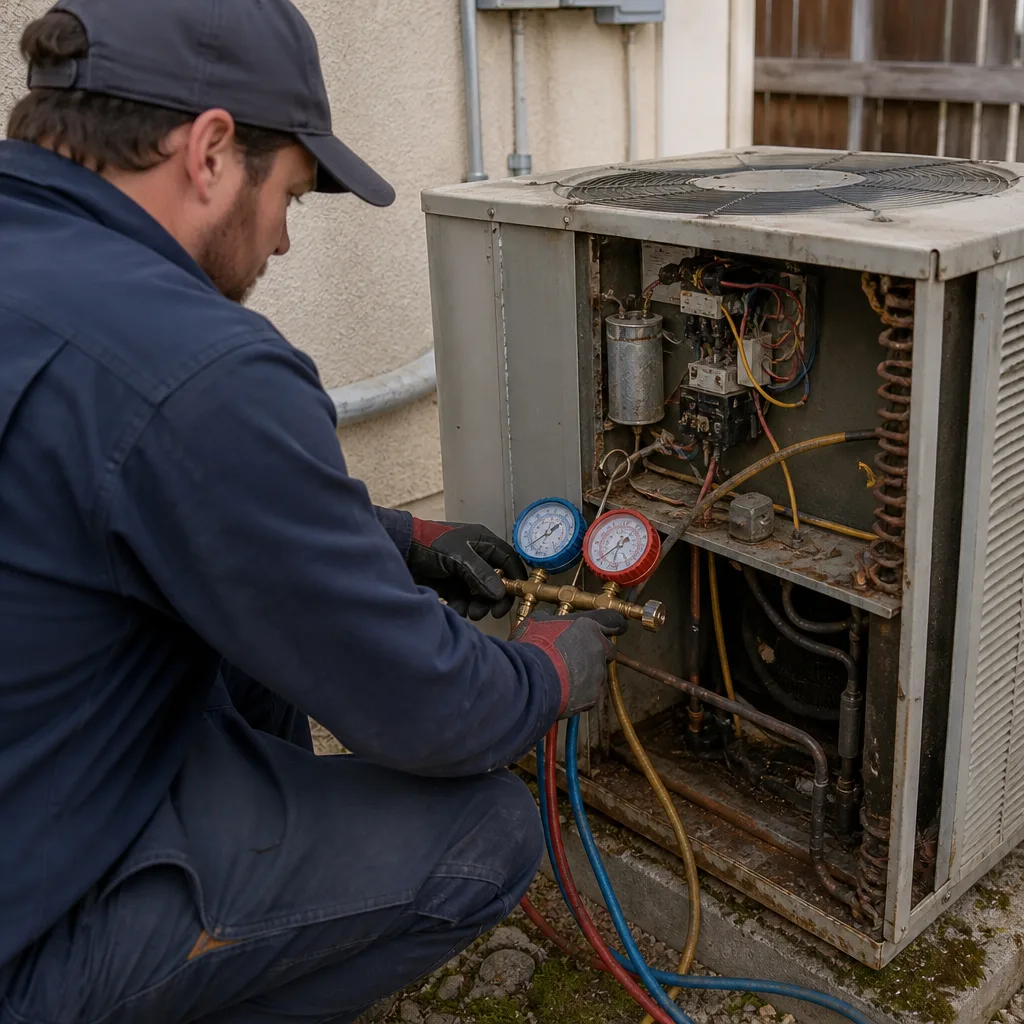
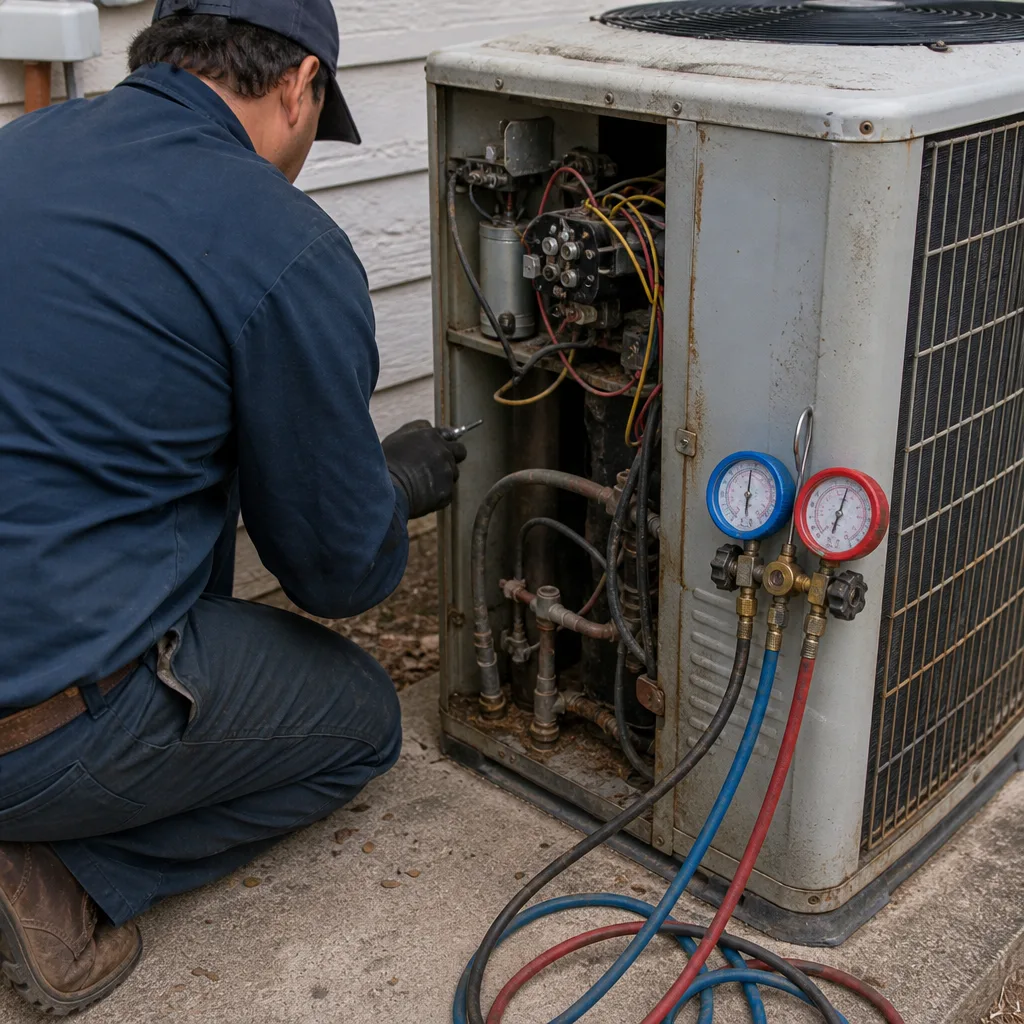
If the pad is out of level, the repair involves resetting the pad, checking the line set for strain, and re-checking pressures once the unit is back to level. This is a professional job; the refrigerant system is sealed and under pressure, and moving the condenser without a plan can crack a line. It’s one of the reasons a professional tune-up is worth scheduling. When a pad issue shows up during a fall check, a furnace repair visit in the same season can handle the heating side while the pad and lines are being looked at. That’s what a full-lifecycle approach looks like: not chasing one issue in isolation, but keeping equipment healthy end to end.
What to Verify Before a Technician Arrives
You’re not trying to DIY the repair. You’re trying to walk into the visit with facts. A technician who knows what the homeowner already observed spends less time diagnosing and more time fixing. Before the call, check these and write down the answers.
- Filter status. Is it new, a few weeks old, or visibly grey? Note the date you last changed it.
- Thermostat behavior. Does the system reach the set point, or does it run continuously without getting there?
- Runtime pattern. Does the unit short cycle, or run in long stretches?
- Exterior coil condition. Look at the fins through the top grille. Are they visibly dusty or matted?
- Line insulation. Any chalky, cracked, or missing foam along the run?
- Pad condition. Level or tilted? Rust streaks or sitting water?
- Strange sounds and smells. Rattles, buzzing, or a musty smell from the vents all point in specific directions.
- Recent weather. Note any recent dust storm or heavy rain; both affect what the technician will find.
Bring those answers to the call. The technician will still run diagnostic checks, but your notes narrow the field and can save a step. It also sets the tone: you’re not asking them to guess, and they’re not guessing back at you.
What Brand Coverage Means for Your Maintenance Visit
Most homeowners didn’t pick the HVAC system in their house. It came with the property, and it’s whatever the previous installer happened to prefer. That means the equipment in Enterprise homes runs across a wide range of brands, and the technician walking in the door needs to recognize what they’re looking at.
We’re trained to work on nine of the industry’s leading lines: Carrier, Trane, Lennox, Goodman, Rheem, York, Daikin, Bryant, and American Standard. The practical difference during a maintenance visit is that the technician reads the actual equipment, not a generic procedure. A Trane air handler has service access points in different places than a Goodman. A Lennox condenser uses different pressure specs than a Rheem. Knowing the brand means the tune-up covers the right things and the recommendations are grounded in what the equipment actually needs, not on which brand is convenient to sell.
This is what we mean by nine brands, one call. Your maintenance visit should always be for the system you have, not the one somebody else wishes you had. If you’re considering future replacement, AC installation decisions should also be grounded in your actual equipment and budget, not in a single brand the contractor prefers to stock.
For context on the HVAC side of that visit, our AC Repair Enterprise team handles the full range, from repair and installation to furnace work. On any given call, our technicians have up to 12 years of experience working across those brands. If you’re in a nearby part of the valley, the same checklist applies to a neighboring property.
Common Mistakes to Avoid
- Sticking to a twice-a-year coil schedule. In a climate with this much dust, the coil can foul between visits. Rinse the fins monthly during the cooling stretch.
- Ignoring cracked line insulation because the system still cools. The line will keep the system running, but the compressor load goes up quietly. Fix the insulation early.
- Assuming the pad is fine because the condenser looks level. Use a level. Slight tilt is invisible to the eye but stresses the refrigerant lines.
- Blocking airflow with landscaping or storage. Two feet of clear space around the condenser matters more here than in most climates because airflow is already fighting the dust.
- Skipping the fall check because “the AC is what matters in summer.” The fall visit is when pad issues and line insulation damage get caught, both of which matter for next summer.
- Turning down an annual tune-up because the system “feels fine.” Most maintenance catches are silent until they become failures. The visit is meant to prevent the failure, not react to it.
- Letting a contractor talk you into replacement when a repair would do. Ask for the reasoning. A brand-agnostic diagnosis should follow the equipment, not a preferred product line, and a repair-first approach means assessing viability before recommending replacement.
When to Call a Professional
Call a professional when the system stops cooling entirely, when you see ice on the indoor coil or the refrigerant lines, when the condenser won’t start or trips the breaker on startup, when you notice refrigerant oil residue at a fitting, or when the pad has visibly tilted and you’re worried about the line set. Also call if you’re seeing a persistent musty smell from the vents or the system’s runtime has grown noticeably longer without a clear weather reason.
Call sooner rather than later if any of those signs occur during a hot stretch. A struggling system that fails mid-summer in Enterprise is more expensive to fix than one that gets caught before it goes down. AC Repair Enterprise offers free estimates in Enterprise. Call (833) 632-6348. We answer 24/7. Fast dispatch from 7am to 7pm, Sunday through Friday. If your system calls for a full pre-season tune-up, that’s the same number.
Frequently Asked Questions
Once a year for a professional tune-up, scheduled in early spring, plus a fall check if you want the pad and line set inspected before the next cooling season. Between visits, the homeowner-side tasks (filter changes, coil rinsing, insulation inspection) run on the calendar above.
Every 30 to 45 days during the cooling season if you have pets, keep windows open, or live near an exposed dirt lot. Outside of cooling season, you can stretch to 90 days. Mark the filter edge with the date so you can track it without a reminder.
You can rinse the exterior coil fins gently with a garden hose from the inside out, and that’s genuinely a good idea between professional visits. What you can’t do yourself is a full coil cleaning, refrigerant check, or electrical component inspection. Those belong to a technician because they involve the sealed refrigerant system and live electrical parts.
Walk the full run from the wall to the condenser and look for chalky, cracked, or missing foam. Feel for bare copper. Check the tie wraps. If you find damage, note the location and have it re-insulated on the next service visit; it’s a small repair that prevents compressor strain.
Yes. Alkaline, clay-heavy soil expands and contracts with moisture, and that movement can tilt a condenser pad over time. A tilted pad puts strain on the refrigerant lines, which can eventually lead to a leak. A level check on the pad is a two-minute item that belongs on any Enterprise maintenance list.
We’re trained on nine leading HVAC brands including Carrier, Trane, Lennox, Goodman, Rheem, York, Daikin, Bryant, and American Standard. If your system is one of those, we diagnose the actual equipment you have. Call (833) 632-6348 to confirm your model and book a visit.
The Bottom Line
A worthwhile maintenance checklist for an Enterprise home runs on the climate, not on a manufacturer’s national template. Filters monthly during cooling season. Coil cleaning every three weeks during the dusty stretch. Line insulation inspection before summer starts. Pad check before and after monsoon season. A professional tune-up in early spring, with the honest recommendation you deserve on repair versus replacement, backed by technicians who work on the brand you already own. That’s a full year of preventive work, and it’s the routine that will actually keep your system ahead of the next hot stretch.
Call (833) 632-6348 for a free estimate on a tune-up or a repair. We answer 24/7. Fast dispatch from 7am to 7pm, Sunday through Friday. If your system is due for a full inspection, that same number gets you on the schedule.
Written by the team at AC Repair Enterprise.
See the difference
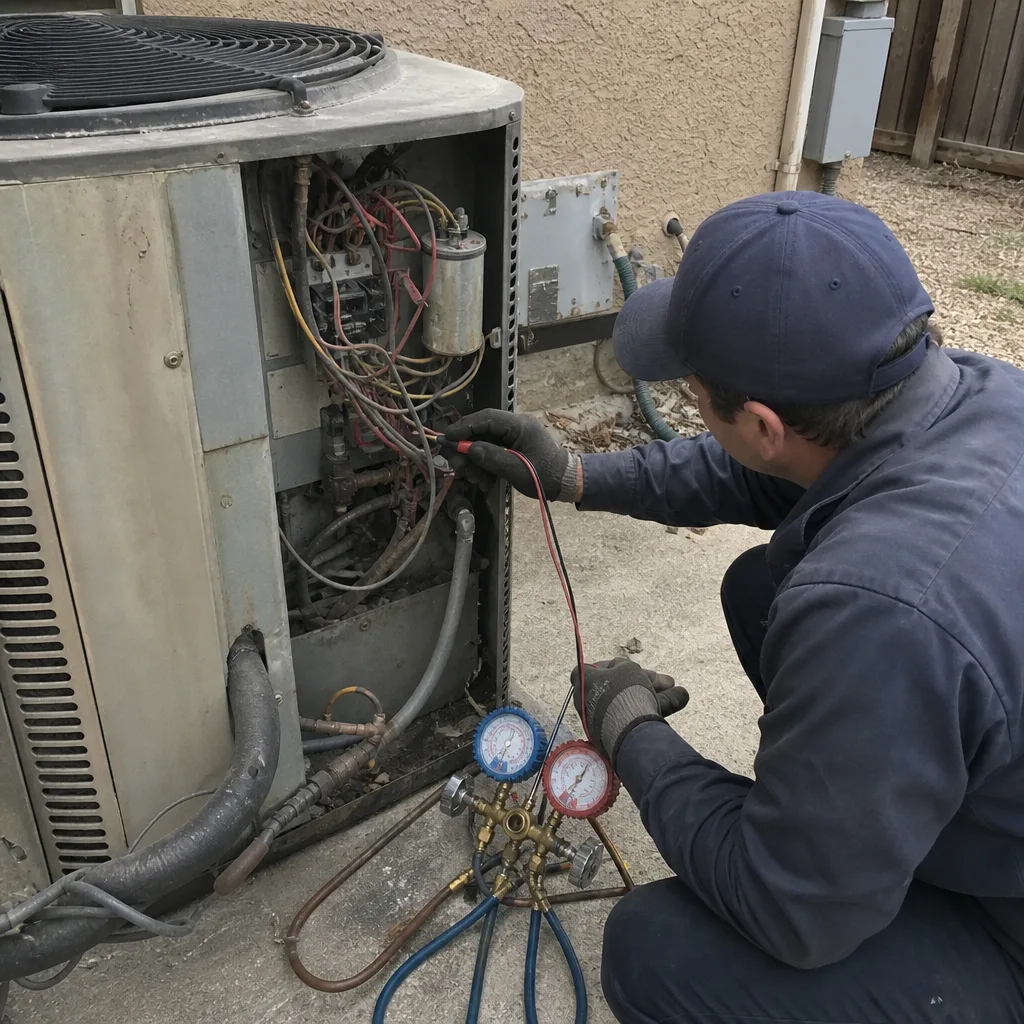 Before
 After
 Before
 After
 Before
 After